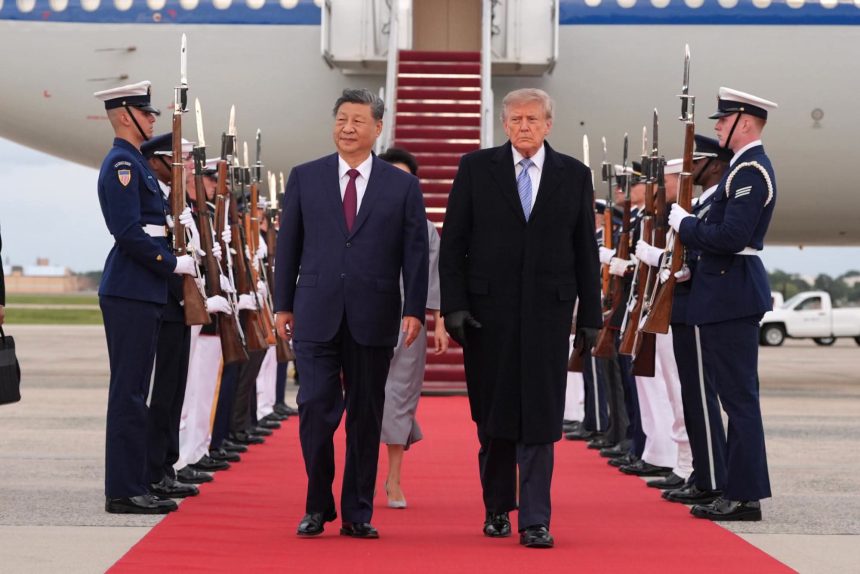
- At the UN, Trump turns American economic, military and financial strength into a forceful leadership argument
By Princely Onyenwe | Editorial Desk
President Donald Trump’s address to the 81st United Nations General Assembly was not merely another presidential speech. It was a forceful presentation of how he believes American power should be projected, negotiated and used on the international stage. From the opening declaration that “America is back” to his insistence that the United States possesses unmatched economic, military and technological strength, Trump turned the UN podium into a platform for an unapologetically national-power argument.
Trump’s central formula was straightforward: action over talk, strength over hesitation and national sovereignty over what he portrays as excessive international constraints. His assertion that “while others have talked, I have acted” became the defining thread of the speech. The argument was not built entirely on rhetoric. The United States remains the world’s largest economy by nominal GDP, while its military expenditure dwarfs that of any other single country and the dollar continues to dominate global foreign-exchange reserves. These figures do not automatically validate every foreign-policy decision Trump defended, but they explain why Washington possesses an unusually broad collection of economic, military and financial instruments.
Trump then moved from power to leverage, with Iran at the centre of that calculation. He defended the US position toward Tehran, warned of potentially devastating consequences if Iran did not reach an agreement and nevertheless left the door open to negotiations. That combination of pressure and diplomacy became one of the defining characteristics of his presentation: American strength, in Trump’s formulation, is not merely something to display but an instrument to compel movement at the negotiating table.
Pezeshkian answered with a dramatically different conception of power. Addressing the same world body, the Iranian president rejected Trump’s narrative and declared that Iran would not “bend at the knee,” while accusing the United States and Israel of aggression. The exchange captured the wider character of UNGA 81: one podium, competing definitions of strength. Trump presented strength principally through American economic, military and technological capacity, while Pezeshkian presented resistance and national defiance as the measure of Iranian strength. Neither was speaking only to the diplomats inside the chamber; both were speaking to domestic constituencies and a wider international audience watching the confrontation unfold.
The reactions around the UN added another layer to the drama. Israeli Prime Minister Benjamin Netanyahu entered the General Assembly chamber to a mass walkout by delegations before his address. Rather than allowing the departure to dominate the moment, Netanyahu confronted it directly, accusing those who left of moral cowardice and challenging them from the podium. The episode illustrated how deeply divided the international community remains over Israel, the Gaza war and the broader question of how the international system should respond to the conflict.
Argentina’s Javier Milei provided another sharp challenge to the traditional UN establishment. In his address, Milei attacked the organisation’s effectiveness and argued that it had failed in its responsibilities over collective security and human rights. His intervention reinforced a broader challenge emerging from several directions at the General Assembly: whether existing multilateral institutions remain capable of addressing the security, economic and geopolitical pressures confronting the world, or whether national governments increasingly intend to pursue their interests with less regard for established international frameworks.
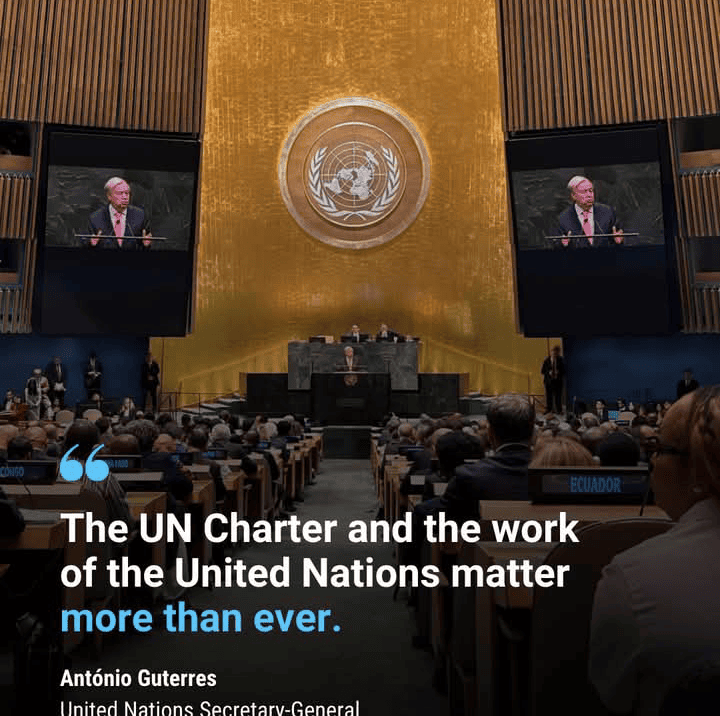
That is what made Trump’s appearance particularly consequential as a political communication exercise. He was not attempting to hide the contradiction between American power and international consensus; he placed that contradiction directly on the table. His criticism of international institutions, emphasis on American sovereignty and insistence that Washington should retain freedom to pursue its national interests all pointed in the same direction: American leadership, in his formulation, should be measured by what it can deliver rather than by how comfortably it fits within the diplomatic consensus.
But power has limits, and the reactions at UNGA 81 demonstrated them. Economic supremacy does not automatically create diplomatic agreement. Military superiority does not guarantee political compliance. A dominant currency does not eliminate geopolitical resistance, and a forceful presidential speech cannot by itself settle wars, rebuild institutions or create international legitimacy. The responses from Pezeshkian, Netanyahu’s critics and Milei therefore matter because they showed that the UN remains a stage where national leaders compete not only for policy outcomes but also for control of the international narrative.
For Africa, and particularly for Nigeria, the lesson is broader than the personalities involved. Countries seeking greater international influence cannot rely exclusively on speeches about sovereignty, development or national greatness. Sustainable leverage requires productive economies, strong institutions, technological capacity, credible security systems, strategic diplomacy and the ability to convert national resources into negotiating strength. America’s position did not emerge from presidential rhetoric alone; it was built through decades of economic expansion, technological innovation, military capability, financial institutions, universities, alliances and global commercial networks.
Trump’s UNGA performance should therefore be understood within that larger architecture. He packaged a complicated concentration of American capabilities into a simple political message: the United States has enormous power, and his administration intends to use it. The reactions that followed showed why that message matters. Iran answered with defiance, Netanyahu confronted those who abandoned his address, Milei challenged the institution itself, while other governments continued to navigate the space between American pressure, international institutions and their own national interests.
The result was a General Assembly that looked less like a gathering of governments speaking with one voice and more like a global argument over the meaning of power itself. Trump put American economic, military and financial strength at the centre of the conversation; his critics and counterparts responded with resistance, institutional criticism and competing claims of national sovereignty. The American century may face stronger competition than before, but at UNGA 81, Trump made clear that Washington does not intend to behave as though American power has already passed its peak.
The real question is therefore not whether America possesses extraordinary power. It does. The harder question is what happens when that power encounters equally determined resistance from states and leaders who refuse to accept Washington’s terms. At UNGA 81, Trump put American power on the podium, and the world answered from across the chamber.