- From petrol and cooking gas to food, rent, wages, medicals and market commodities, Nigerians seek tangible relief beyond economic statistics
By Princely Onyenwe | Editorial Desk
There are moments when a presidential address should rise above political rhetoric and speak directly to the condition of the people. Nigeria’s 66th Independence Day was one of such moments. After more than three years of painful economic reforms, Nigerians were not merely waiting to hear another explanation of why difficult decisions had become necessary; they wanted to know when those decisions would begin to translate into tangible relief in their daily lives.
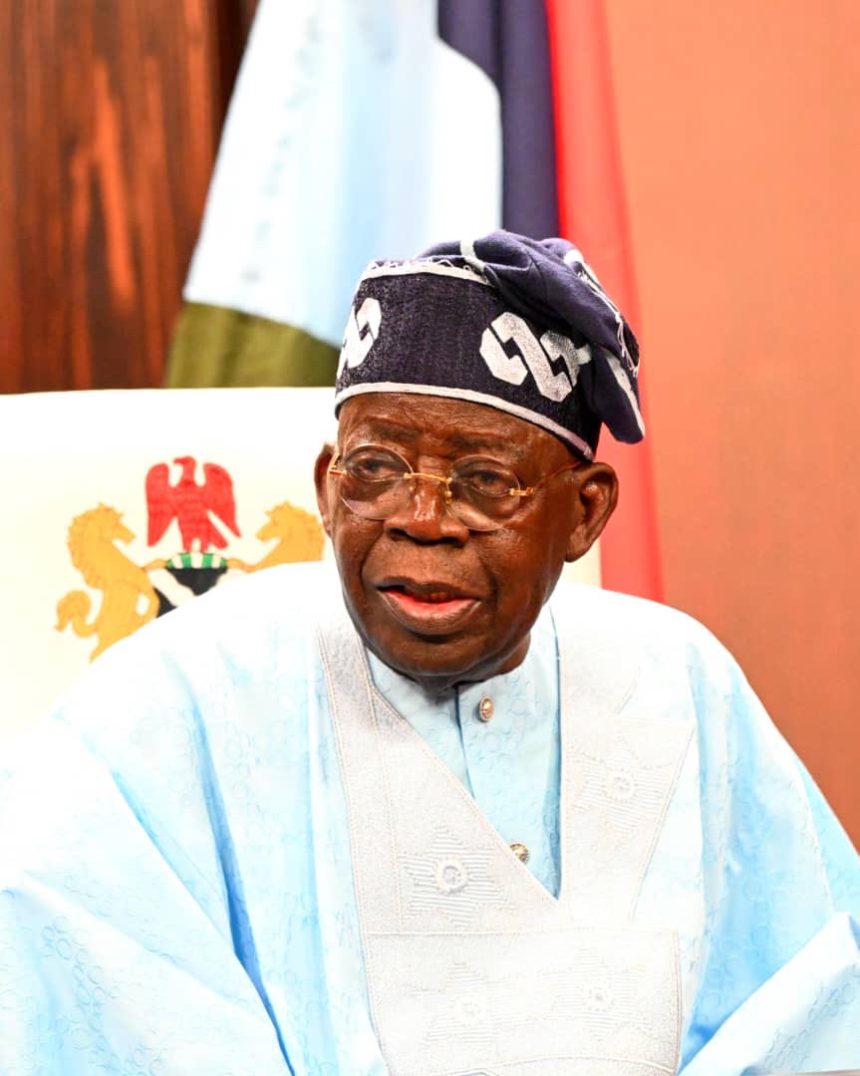
President Bola Ahmed Tinubu’s Independence Day address presented a government that believes its economic reforms have corrected Nigeria’s course. The President pointed to economic growth of more than four per cent, lower inflation from its peak, stronger foreign reserves, improved foreign-exchange stability, reduced oil theft and record non-oil export earnings. He declared that the emergency treatment was over and that Nigeria had entered an “age of prosperity.”
Those figures and claims deserve recognition and scrutiny. But they do not tell the whole story. The difficult question is what those macroeconomic improvements mean to the Nigerian who leaves home every morning to confront the cost of transport, food, electricity, rent, school fees, medicine and other basic necessities. That is where the presidential narrative meets the reality on the streets.
Inflation falling does not mean that prices have returned to where they were before the inflationary surge. It means, essentially, that prices are rising more slowly. The World Bank reports that food inflation still reached 20.3 per cent in July 2026, while an estimated 69.6 per cent of Nigerians lived below its lower-middle-income poverty line in 2025. The IMF, while acknowledging improved macroeconomic outcomes from the reforms, said conditions remained difficult for many Nigerians, with poverty at 63 per cent on the national poverty line and an estimated 27 million people facing food insecurity in late 2025.
This is why the Independence Day address left an important gap between government narrative and citizens’ expectations. I have engaged several notable technocrats, government officials, political aides and civil liberty organization on the expected progression in governance and regrettedly i found out that more than 78% of Nigeria population are angry and disappointed of the governance pattern that has yielded no substantial development till date.
At 66, Nigerians wanted to hear not only that the economy was improving, but when they should expect to feel the improvement. They wanted answers on petrol prices, cooking gas, bread and other bakery products, food and market commodities, building materials, rent, electricity, transport and the purchasing power of workers. They wanted to hear how the Federal Government intends to protect civil servants and vulnerable households whose incomes have been severely eroded by the rising cost of living.
The question was not necessarily whether every reform should be abandoned. The question was whether the pain Nigerians have endured is finally producing visible and measurable relief. And technically no detailed approach was given to the challenging level of insecurity across the states in Nigeria. A particular state in the East was hit with passengers abduction early independence day and at the time of this publication their whereabouts is yet to be identified and official press release made from both police and government.
That question could hardly have been more timely. Public-sector workers had demanded a reduction in petrol prices, a wage award and negotiations on a new minimum wage, and warned of a three-day strike if the Federal Government failed to respond. The warning came immediately before the President’s Independence Day broadcast.
The symbolism is difficult to ignore: while the nation celebrated political independence, organised workers were preparing industrial action over economic hardship. This is the point at which presidential communication must move beyond defending policy and begin demonstrating outcomes.
The Tinubu administration has consistently argued that the removal of petrol subsidy was necessary because the old system was financially unsustainable and riddled with distortions. There is a legitimate economic argument behind that position, and the IMF has acknowledged that the reforms have improved Nigeria’s macroeconomic resilience. But the same IMF assessment also makes clear that the benefits have not eliminated the hardship confronting millions of Nigerians.
Therefore, the central question is no longer simply whether subsidy removal was necessary. Nigerians also want to know what has happened to the savings and how those resources are being converted into infrastructure, public services, social protection, productive employment and improved living standards.
The Nigeria Labour Congress has specifically demanded an account of subsidy savings, arguing that inflation has eroded the purchasing power of the N70,000 minimum wage and increased the burden of food, transportation, housing and education. That demand deserves a clear public answer.
Government accountability is not an attack on economic reform. Indeed, it is what makes reform credible. Additionally , government may legitimately tell citizens that difficult medicine was required. But when the same government announces that the emergency treatment is over, citizens are equally entitled to ask whether the symptoms have actually subsided.
The President’s own speech provides the standard by which his administration should now be measured. He said prosperity means affordable food and transportation, reliable power for factories, productive jobs, accessible education and families able to face the future with confidence.
Those are not abstract promises. They are measurable outcomes. If food remains beyond the reach of millions, if transport consumes a large portion of household income, if rent continues to outpace earnings, if energy costs remain a major burden on businesses and households, and if workers continue demanding emergency wage relief, then the transition from reform to prosperity remains a work in progress. This is where the administration must distinguish between economic recovery on paper and economic recovery in the household.
A trader does not buy GDP growth. A baker does not produce bread with foreign reserves. A civil servant does not pay rent with improved exchange-rate stability. A farmer cannot feed a family with a presidential assurance that the economy has turned the corner.
They live with the consequences. They pay in naira. They calculate. They make choices between food and transport, rent and school fees, medicine and other household necessities. That is why economic policy must ultimately be judged by its human transmission.
The President spoke of expanding agriculture, mechanisation, storage, transportation, industrial production, digital connectivity, jobs and social protection. Those are important objectives. But objectives must eventually become outcomes, and outcomes must become visible enough for ordinary Nigerians to recognise them without being repeatedly told that they exist.
There is also a need for greater precision in the government’s economic communication. Competition can lower prices, but different markets respond to different structural pressures. Telecommunications, petroleum, food, housing and electricity cannot simply be treated as identical markets. Petrol pricing, for instance, is affected by crude supply, refining capacity, exchange rates, logistics, taxation and market structure. Domestic refining is important, but one refinery—however significant—cannot by itself guarantee permanently cheap energy for every Nigerian.
The same principle applies to the wider reform programme: Nigeria needs competition, productivity and investment, but it also needs transparency about who bears the immediate costs and who receives the eventual gains.
The administration cannot indefinitely ask citizens to sacrifice today on the promise of prosperity tomorrow.
Tomorrow must eventually arrive. And after more than three years in office, the administration is approaching the point where explanations of inherited problems must increasingly be accompanied by measurable evidence of improvement under its own stewardship.
This does not mean ignoring the country’s economic history. Nigeria’s structural problems did not begin in 2023, and President Tinubu is correct that many of the country’s weaknesses accumulated over decades. But government inherits both problems and responsibility. Once in office, it must eventually answer for the conditions under which citizens are living. That is the essence of democratic accountability.
The President’s Independence Day address therefore should not be dismissed simply because it contained optimism, just as it should not be accepted uncritically because it contained statistics. The economic gains cited by the administration are real areas of progress worth examining. The hardship reported by workers and reflected in poverty, food-security and price data is also real and deserves equal attention.
Nigeria needs both sides of the story. But above all, it needs the bridge between them. That bridge should be visible in lower production and distribution costs, more affordable food, more manageable transport fares, improved purchasing power, stronger public services, productive employment, safer communities and greater economic security for families.
The country does not need another generation of citizens becoming experts in endurance. It needs citizens to experience the dividends of the reforms they have been asked to endure.
At 66, Nigeria has heard enough promises about a better tomorrow. The Tinubu administration now says the country has passed through its “Red Sea”, corrected its course and entered an age of prosperity.
Then the burden of proof has changed. The government no longer needs only to explain why the journey was difficult.
It must show Nigerians what has been achieved, what remains unfinished, when the outstanding challenges will be addressed and when the ordinary household will begin to feel the difference.
Because Nigerians are not merely following the theory of economic reform.
They are living its consequences. And the question that should remain before the government after the Independence Day speech is simple: When will the prosperity promised from the podium become the reality experienced in the Nigerian home?
I speak the minds of million Nigerians across the globe seeking for a better Nigeria.