- From feminist icon and global literary star to grieving mother questioning her bond with Nigeria
By Princely Onyenwe | Editorial Desk
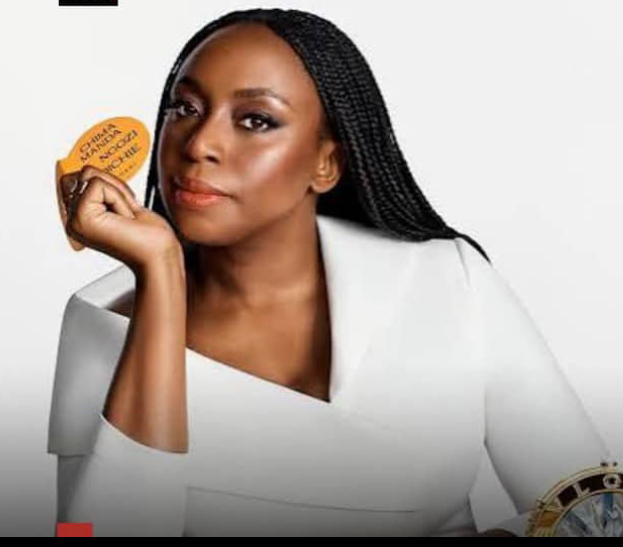
Chimamanda Ngozi Adichie spent years telling the world stories about Nigeria. She wrote about its people, contradictions, history, families and wounds. Nigeria was not merely the country of her birth; it was central to her identity and literary imagination. Today, however, the same country has become a place she says she no longer wants to return to.
That is a painful transformation, and Nigerians should resist the temptation to dismiss it as the emotional reaction of a celebrity. Adichie is a globally celebrated writer, feminist thinker and one of Nigeria’s most recognisable cultural voices. When a woman who spent years carrying Nigeria’s stories to the world says the death of her 21-month-old son has fundamentally changed how she feels about the country, Nigerians should listen before they judge.
Born in Enugu in 1977 and raised partly on the University of Nigeria, Nsukka campus, Adichie grew up in an accomplished academic family. Her father was a professor, while her mother became the university’s first female Registrar. She later moved to the United States at 19 and built a literary career that would place her among Africa’s most influential contemporary writers.
Her novels, including Purple Hibiscus, Half of a Yellow Sun and Americanah, brought Nigerian experiences to international audiences, while her essays and public lectures established her as a prominent voice on identity, gender and feminism. Her honours include the Commonwealth Writers’ Prize, the Women’s Prize for Fiction, the National Book Critics Circle Award and the MacArthur Fellowship.
Her feminism has also attracted public assumptions that say more about society than about Adichie herself. Some people have wrongly equated being a strong feminist with being a lesbian. That conclusion is neither logical nor justified. Feminism is an advocacy for equality, dignity and women’s rights; it is not a declaration of sexual orientation.
Adichie’s marriage and motherhood further demonstrate why public ideology should not be confused with private identity. She is married to Nigerian physician Ivara Esege and is a mother. But neither marriage nor motherhood should be used to prove or disprove anyone’s sexuality. A woman’s private identity belongs to her, just as her right to advocate for women’s equality belongs to her.
Motherhood, however, has now placed Adichie in the most devastating chapter of her life. In December 2025, she lost her 21-month-old son, Nkanu, one of her twin boys, following a medical emergency in Nigeria. The circumstances surrounding his death are now the subject of a coroner’s inquest after Adichie alleged that her son was given an excessive amount of propofol during an MRI examination at Euracare. The family has called for improvements in Nigeria’s healthcare system, while the precise circumstances surrounding the child’s death remain matters for the appropriate investigative process to establish.
This is where the story stops being merely about a famous author and becomes a deeply human national tragedy. Adichie is a Nigerian whose creative identity was shaped by the country. Nigeria supplied the settings, characters, memories and social realities that helped define her celebrated works. Her connection to the country was therefore much deeper than geography. It was emotional, cultural and intellectual.
Now grief has altered that relationship. In her interview with The New York Times, Adichie said she no longer feels the same connection to Nigeria and does not want to return. Her children could be the only reason she would consider coming back, while her daughter still regards Nigeria as her “happy place.”
Those words should not be interpreted casually. A grieving mother is not speaking from the detached position of a political analyst. She is speaking about a country that, in her present experience, has become inseparable from the loss of her child.
Yet her experience raises a disturbing national question: if a highly educated Nigerian family with international connections can be left asking difficult questions after a child’s death during medical treatment, what happens to the ordinary Nigerian who has neither the resources nor the international platform to demand answers when something goes wrong in a hospital?
That is why Nkanu’s death must not become merely another social-media controversy involving a famous Nigerian. It should compel a serious examination of patient safety, medical standards, emergency response, anaesthesia, regulation and accountability within Nigeria’s healthcare system.
The coroner’s inquest should therefore be allowed to establish the facts without political pressure or trial by social media. The family deserves answers, and the public deserves clarity. If professional, institutional or systemic failures are established, the lessons must be used to prevent another family from experiencing a similar tragedy.
Adichie may eventually return to Nigeria. She may not. Time may soften her pain, or her surviving children may eventually draw her back. Nobody can predict what grief will ultimately do to her relationship with the country. But something has already changed. For years, Chimamanda Ngozi Adichie used her voice to make the world look at Nigeria differently. Through her books, essays and speeches, she challenged simplistic ideas about Africa and presented Nigeria in all its complexity.
Now, through the tragedy of her son’s death, she is forcing Nigeria to look at itself. Nigeria does not have to agree with every word Adichie says. It does not have to accept every conclusion she reaches in her grief. But neither should the country respond with insults, defensiveness or arguments about her feminism. Her feminism did not make her a lesbian, just as motherhood does not erase her feminism.
What her tragedy demonstrates is something far more important: behind the celebrated author, feminist voice and international public intellectual is a mother who lost her child and whose understanding of home has been profoundly shaken. Nigeria should not tell her how to grieve. It should listen to what her grief is saying. And above all, it should demand the truth.