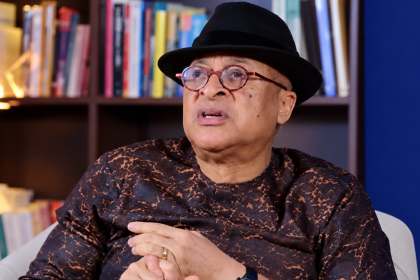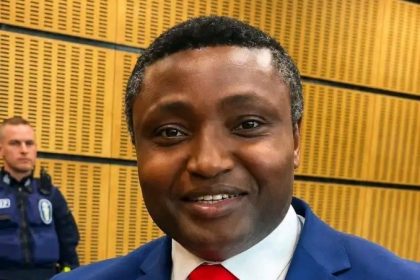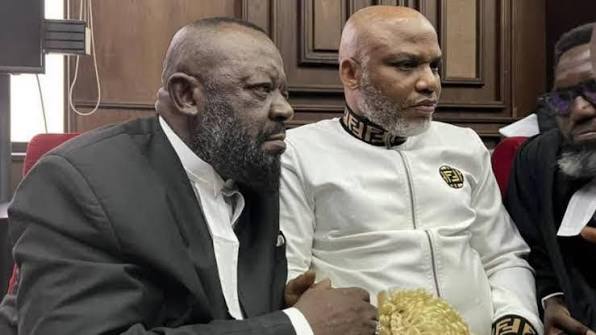
Barrister Aloy Ejimakor, Special Counsel and former lead counsel to the leader of the Indigenous People of Biafra (IPOB), Nnamdi Kanu, has clarified that a reference to an election boycott by an IPOB leader should not be interpreted as a definitive decision to boycott the 2027 presidential election. He said the remark was conditional and argued that presenting it as an outright boycott declaration risked creating a misleading narrative about IPOB and Kanu.
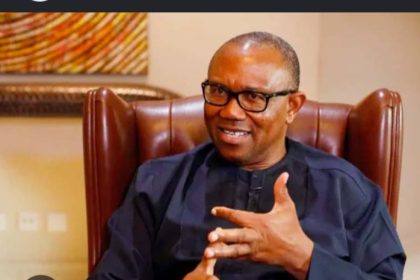
In a self-recorded video obtained by 9News Nigeria, Ejimakor said his clarification followed a journalist’s question about whether a possible IPOB boycott could affect Peter Obi’s electoral chances in the South-East.
According to him, the question suggested that a conditional statement made during a broadcast by Mazi Chris Nwaogu, whom he identified as the head of IPOB’s Directorate of State, was being interpreted as a settled position on the forthcoming elections.
“Yes, he used the word boycott, but it was conditional, a conditional statement,” Ejimakor said.
He explained that the remark concerned the handling of Kanu’s case at the Court of Appeal, particularly the scheduling of his matter for an expeditious hearing. According to Ejimakor, the position expressed in the broadcast was that IPOB would consider boycotting the elections if the matter was not set down for hearing as promptly as expected.
Ejimakor said that distinction was essential, maintaining that mentioning a boycott under specified circumstances did not amount to announcing an unconditional withdrawal from the electoral process.
Turning to Kanu’s case, the lawyer questioned what he described as delays in the Federal Government’s response to processes filed by the IPOB leader. He argued that any objections to those processes should be presented before the Court of Appeal so that the matter could proceed.
“If the government has some issues with those processes, the best way to handle those issues, the moral and proper way to handle those issues is to table them before the Court of Appeal,” he said.
Ejimakor alleged that a failure to file the necessary responses could delay the hearing, describing such an outcome as unfair. He also urged the appellate court to consider what he said were pending applications and correspondence from Kanu.
According to him, these included an application for accelerated hearing, an application for bail and letters requesting attention to the matter. He said concerns about those outstanding issues formed the background to the boycott remark.
Addressing the possible electoral implications for Obi, Ejimakor challenged the assumption that the South-East could automatically be treated as a guaranteed voting bloc for any politician. He argued that the more fundamental question ahead of 2027 was whether ballots cast by Nigerians would determine the outcome.
He expressed doubts about the credibility of the 2023 elections and questioned what had changed to justify absolute confidence in the next exercise. However, he clarified that he was not making a categorical prediction that votes would fail to count in 2027.
“I’m also not saying that absolutely votes will not count,” he said, describing the issue as something Nigerians needed to consider and discuss openly.
Ejimakor urged political actors and voters to examine the safeguards available to protect the electoral process, including the remedies citizens could pursue if they believed their votes had not been reflected in the results.
In his view, the prospect of votes not counting across the country, including the South-East, deserved greater attention than speculation about the effect of a conditional boycott remark.
He warned that continued misrepresentation of the statement could unfairly damage IPOB’s image, insisting that public discussion should accurately reflect what was said and the circumstances attached to it.
“So boycott or no boycott is not the issue. The issue is, will the votes count?” Ejimakor said.
He urged political camps, voters and the wider public to place electoral credibility at the centre of discussions ahead of 2027, adding that a fuller interview containing the journalist’s question would be available in the coming days.