China does not hold a formal presidential election, and its citizens do not directly elect the president through a nationwide popular vote.
Under Article 79 of China’s Constitution, the president and vice-president are elected by the National People’s Congress (NPC), the country’s national legislature. The president serves a five-year term, corresponding to the term of the NPC.
The distinction is between a direct popular election and an indirect election conducted by a political institution.
In a country such as Nigeria, eligible voters cast ballots for presidential candidates. In China, the National People’s Congress formally elects the president, but the Chinese Communist Party’s leadership largely determines who occupies the position before the vote takes place.
China therefore has a presidential office and a formal election procedure, but it does not have a competitive, multiparty presidential contest in which citizens can choose between rival candidates for the nation’s highest state office.
That is the central difference between China’s political system and presidential democracies.
HOW CHINA’S PRESIDENT IS SELECTED
To understand the selection process, it is necessary to examine the relationship between the Chinese Communist Party and the Chinese state.
The CCP was founded in 1921 and established the People’s Republic of China on October 1, 1949, following the Chinese Civil War. It has remained the country’s dominant ruling party ever since.
China operates a party-state system. The Communist Party is not simply one political organisation competing with others for control of government. It occupies the commanding position across the political system and directs the institutions responsible for implementing its policies.
The selection process broadly follows this pattern:
Chinese Communist Party National Congress
Delegates meet, generally every five years, and elect the Central Committee.
Central Committee and top Party leadership
The senior Party institutions determine the country’s top political leadership, including:
The general secretary, the National People’s Congress, the national legislature formally elects the president, the President of China
The elected president serves as head of state, normally alongside other senior Party and military positions.
This is a simplified illustration of the political structure, not a complete legal description of every appointment procedure.
In practice, the position of general secretary of the Communist Party is particularly important. The person holding that office leads the Party, which exercises power across the state.
Since 1993, the offices of president and Party general secretary have generally been held by the same person. The president’s authority must therefore be understood alongside the broader Party leadership structure, rather than in isolation.
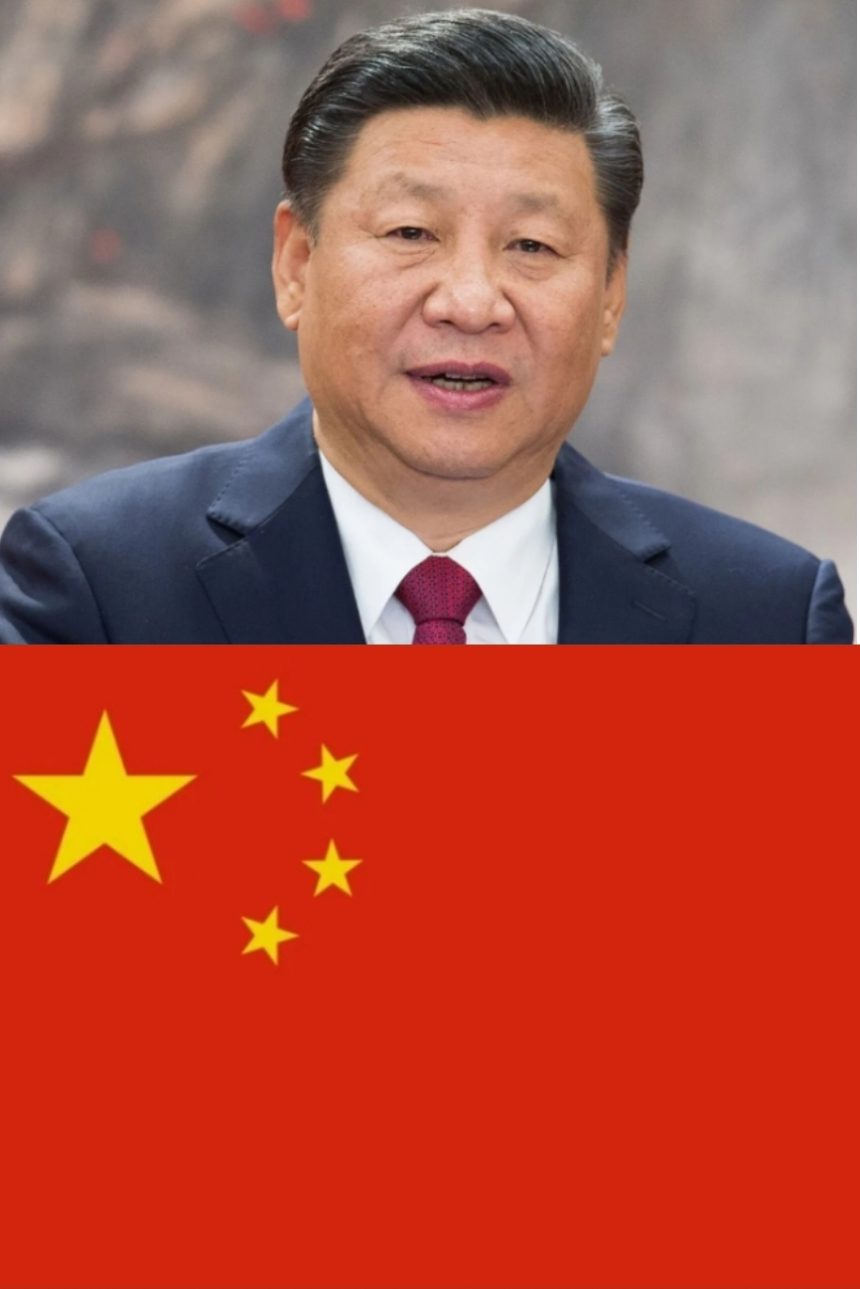
China’s current leader, Xi Jinping, became general secretary of the CCP in November 2012 and president in March 2013.
In 2022, he secured a third term as Party general secretary. In March 2023, the National People’s Congress elected him to a third consecutive presidential term. A constitutional amendment in 2018 had removed the previous limit of two consecutive presidential terms.
These developments illustrate how China’s leadership continuity differs from systems in which voters periodically decide whether an incumbent should remain in office.
WHY DOES CHINA PREFER PARTY-LED LEADERSHIP SELECTION?
The answer is not simply that Chinese citizens are unable to vote wisely or that poor people lack the knowledge to choose their leaders.
Such claims are opinions, not established facts. Poverty does not automatically make someone politically ignorant, just as wealth, education or elite status does not guarantee sound leadership.
Instead, China’s political system reflects the Communist Party’s ideology, its historical experience, its understanding of national development and its determination to retain political control.
A. The Party believes in centralised leadership
The CCP argues that a strong central authority enables China to coordinate national priorities, maintain political stability and pursue long-term development objectives.
Its model places the Party at the centre of decision-making, with state institutions responsible for implementing policies.
This arrangement differs from competitive electoral systems, where rival parties campaign, criticise the government and seek to replace the ruling administration through elections.
China’s leadership argues that its approach supports unity and avoids the disruptions associated with frequent changes in government.
However, the absence of competitive national elections also limits the public’s ability to remove the ruling Party through the ballot box.
B. Political recruitment takes place within the Party
The original article describes the CCP as an elite organisation whose members are selected because of their intelligence, education, experience and achievements.
There is some truth in the observation that Party membership involves a formal application and vetting process. China’s political establishment also has a system for recruiting, training and promoting officials through Party and government institutions.
According to a Congressional Research Service report updated in 2026, the CCP had approximately 100.3 million members, representing about seven per cent of China’s population.
Nevertheless, it would be inaccurate to suggest that every Party member is an exceptional strategist or that membership automatically proves competence.
Political loyalty, ideological conformity, personal relationships and the priorities of senior leaders can also influence advancement.
The critical distinction is that China selects its top leaders through a Party-controlled political process, rather than asking the entire electorate to choose between competing presidential candidates.
C. China Prioritises Continuity In National Planning
China’s political model allows the ruling Party to pursue long-term economic and industrial strategies without the same direct electoral pressure experienced by governments facing frequent competitive national elections.
Major programmes in infrastructure, manufacturing, technology, transport, energy and urban development can extend across several leadership cycles.
The Belt and Road Initiative, launched in 2013, is one example of a long-term international infrastructure and economic strategy.
However, continuity is not exclusive to one-party states. Democracies also maintain infrastructure programmes and long-term policies across successive governments.
The real question is whether political continuity produces better outcomes than competing systems, and under what circumstances.
Centralisation can make coordinated action easier, but it can also make it harder to challenge failed policies or correct mistakes when senior leaders receive inadequate criticism.
DID CHINA’S POLITICAL SYSTEM HELP MAKE IT AN ECONOMIC POWERHOUSE?
China’s economic transformation is one of the strongest arguments made by supporters of its development model.
In 1978, China began a major period of economic reform and opening up. Over subsequent decades, it expanded international trade, attracted investment, developed manufacturing industries and introduced market mechanisms while retaining Communist Party political control.
The results were extraordinary.
According to the World Bank, China’s economic growth since 1978 averaged more than nine per cent annually over an extended period, while nearly 800 million people were lifted out of extreme poverty. The country moved from low-income status to upper-middle-income status.
China became a global manufacturing centre and developed internationally influential companies in telecommunications, electric vehicles, e-commerce, digital services and other technology sectors.
Its infrastructure expansion, including high-speed railways, ports, roads and major urban developments, has also transformed the country.
These achievements demonstrate the potential of sustained economic planning, investment, industrial development and effective implementation.
But they do not establish that the absence of direct presidential elections was the sole cause of China’s success.
Several factors contributed to the transformation, including market-oriented reforms, foreign investment, export-led growth, urbanisation, education, infrastructure spending, a large labour force and access to international markets.
China’s experience also shows that a politically centralised state can operate an economy containing substantial private enterprise and market competition.
The more useful lesson is to examine which economic policies worked, how they were implemented and whether other countries can adapt them to their own circumstances.
IS THE CHINESE COMMUNIST PARTY REALLY A MERITOCRACY?
One of the most important claims in the original article is that China places competent people in leadership positions while other countries allow popular opinion to determine who governs.
This comparison is too simplistic.
China has developed administrative structures through which officials can acquire experience in local government, provincial administration, economic management and Party leadership.
Some officials have substantial technical expertise and extensive experience in managing large institutions.
However, a system that promotes officials internally is not automatically a meritocracy. The quality of its appointments depends on the criteria used, the reliability of performance assessments and the extent to which leaders can be held accountable.
In a highly centralised political system, an official may be rewarded for delivering results. The same official may also have incentives to satisfy superiors, conceal problems or avoid decisions that conflict with the preferences of senior Party leaders.
Without open political competition, independent media and sufficiently independent oversight, it can be difficult for citizens to determine whether appointments reflect competence, loyalty or a combination of both.
A democratic system has its own weaknesses. Candidates can win elections through emotional appeals, misleading promises, patronage or political division.
Yet competitive elections also offer citizens a mechanism for rejecting leaders, changing governments and contesting political decisions.
Neither system guarantees competent leadership. The important question is how each system selects capable officials, detects failure, limits abuses of power and corrects mistakes.
WHAT ABOUT CHINA’S CLAIM TO BE A DEMOCRACY?
China’s political leadership presents its system as a form of people’s democracy, arguing that representation, consultation and governance should not be measured solely by whether citizens directly elect the national president.
The country’s official political framework includes people’s congresses at different administrative levels, local elections and consultative institutions.
However, these arrangements operate within a system dominated by the CCP.
According to Freedom House’s Freedom in the World 2025 report, China received a score of 9 out of 100 and was classified as “Not Free”. The organisation cited the absence of direct or competitive national executive elections and the Communist Party’s control over political participation.
China also has eight officially recognised minor non-Communist parties. Their existence, however, does not amount to the kind of multiparty competition in which an opposition party can win a national election and replace the ruling government. They operate within a political framework that accepts the CCP’s leading role.
The distinction is significant.
A country may have legislative bodies, consultation processes and local elections without offering voters a genuine opportunity to replace the national ruling party through competitive elections.
Consequently, China’s system should be assessed according to its actual institutions and political practices, not simply the terminology used by its government.
THE OTHER SIDE: ACCOUNTABILITY, FREEDOM AND CONCENTRATION OF POWER
China’s model has produced major economic achievements, but it also raises important questions about how power is controlled.
LIMITED NATIONAL POLITICAL COMPETITION
Citizens cannot choose between rival parties in a competitive national presidential election. The ruling Party’s dominance means there is no established electoral mechanism through which an opposition party can replace it at the national level.
RESTRICTIONS ON THE MEDIA
The Chinese state and Party exercise extensive control over news organisations and online information.
Human Rights Watch’s World Report 2026 describes restrictions on freedom of expression, association, assembly and religion, as well as the government’s control over major information channels.
These restrictions matter because journalists, researchers and citizens can help identify corruption, policy failures and abuses of authority.
THE RISK OF UNCHECKED AUTHORITY
Centralised power can facilitate decisive action, but it can also concentrate decision-making in the hands of a small number of leaders.
Where independent institutions are weak, officials may find it difficult to challenge senior authorities or expose serious policy errors.
Anti-corruption campaigns may punish wrongdoing, but their effectiveness also depends on transparency, due process and institutions capable of scrutinising those conducting the investigations.
THE QUESTION OF PUBLIC CONSENT
A government may deliver economic growth and infrastructure while limiting electoral competition. Conversely, a government elected democratically may perform poorly.
These are different dimensions of governance.
Economic performance does not automatically establish democratic legitimacy, just as elections alone do not guarantee effective government.
The central debate is whether a political system can combine administrative competence, public participation, accountability and protection of citizens’ rights.
FOUR LESSONS OTHER COUNTRIES CAN DRAW FROM CHINA
China’s experience offers lessons for countries seeking economic development and stronger public institutions. These lessons should be distinguished from an endorsement of its one-party political system.
1. Competence matters more than political slogans
Governments need skilled administrators, qualified professionals, sound economic policies and measurable performance standards. Political popularity should not be the only criterion for appointing people to important public offices.
2. Long-term planning is essential
Infrastructure, education, industrial development and technological innovation require sustained investment. Governments should develop plans that survive electoral cycles while allowing policies to be reviewed when evidence shows they are failing.
3. Measure results rather than promises
Governments should publish reliable data on employment, poverty, education, healthcare, infrastructure and public spending. Citizens must be able to determine whether policies are delivering measurable improvements.
4. Competence must be matched with accountability
Qualified leaders still need independent oversight, transparent decision-making, functioning courts, free public debate and safeguards against corruption. Institutions must be able to identify failure and correct it, regardless of who holds power.
WHAT CAN NIGERIA LEARN FROM CHINA’S MODEL?
For Nigeria, the debate has particular relevance.
The country faces persistent challenges involving unemployment, inflation, insecurity, electricity supply, infrastructure, public-sector performance and the implementation of development policies.
Nigeria operates a multiparty presidential system under which citizens elect the president and other representatives. This gives voters an opportunity to change political leadership through elections.
However, elections alone cannot guarantee good governance.
A government can win an election and still fail to deliver affordable electricity, effective healthcare, quality education, secure communities or reliable public transport.
Similarly, appointing technically qualified people does not guarantee good results if institutions are weak, corruption is widespread or public officials face inadequate scrutiny.
Nigeria could draw practical lessons from China’s emphasis on long-term industrial policy, infrastructure development, technical training, manufacturing, strategic investment and the coordination of national development programmes.
It could also strengthen merit-based appointments, professionalise the civil service, improve policy monitoring and establish clearer consequences for poor performance.
But copying China’s political structure would raise a separate question: how would Nigeria preserve competitive elections, constitutional rights, federalism and the public’s ability to hold leaders accountable?
The more productive objective would be to learn from China’s economic and administrative achievements without assuming that restricting political competition is necessary to reproduce them.
Nigeria needs institutions that can identify competent leaders, give them the resources to work and hold them accountable for their results.
DOES CHINA PROVE THAT STABILITY IS BETTER THAN DEMOCRACY?
Supporters of China’s model often argue that political stability is essential for development because frequent changes of government can disrupt policies and delay major projects.
There is a legitimate point here: consistent policy implementation can help governments deliver long-term programmes.
However, stability and democracy are not mutually exclusive.
Democratic countries can maintain national development strategies across successive administrations, while authoritarian governments can experience policy failures, corruption, economic crises and political instability.
The important distinction is between continuity that supports effective governance and continuity that protects leaders from scrutiny.
A stable government should not be judged only by how long it remains in power. It should also be judged by the quality of its decisions, the welfare of its citizens, the fairness of its institutions and its willingness to correct mistakes.
China’s economic development demonstrates the potential benefits of sustained planning and coordinated state action. It does not prove that competitive elections are inherently chaotic or that authoritarian rule is universally superior.
CHINA ELECTS ITS PRESIDENT, BUT THE PEOPLE DO NOT CHOOSE DIRECTLY
China’s political system is fundamentally different from the presidential systems found in many democracies.
Its citizens do not participate in a nationwide popular vote to select the president. Instead, the National People’s Congress formally elects the president within a political structure dominated by the Chinese Communist Party.
The Party’s leadership determines the country’s top political direction, and its internal selection processes play a decisive role in determining who occupies the highest offices.
This arrangement reflects the CCP’s belief in centralised leadership, political continuity and Party-led development.
China’s economic achievements, including its extraordinary reduction in extreme poverty and expansion of industrial capacity, deserve serious examination. But those achievements resulted from several interacting factors and cannot be attributed exclusively to the absence of direct presidential elections.
Likewise, the system’s concentration of power raises legitimate concerns about political competition, transparency, civil liberties and accountability.
The central lesson is not that poor people should be excluded from choosing their leaders, or that elites are inherently better governors.
The more important lesson is that countries need competent leadership, effective institutions, long-term planning and accountability.
China has pursued these objectives through a one-party political structure. Other countries must decide how to pursue them within their own constitutional arrangements and social realities.
For Nigeria and other developing countries, the question is not simply whether to copy China or reject its model.
It is how to build a system in which leaders are qualified, public resources are used effectively, policies produce measurable results and citizens retain meaningful ways to question and hold their governments accountable.