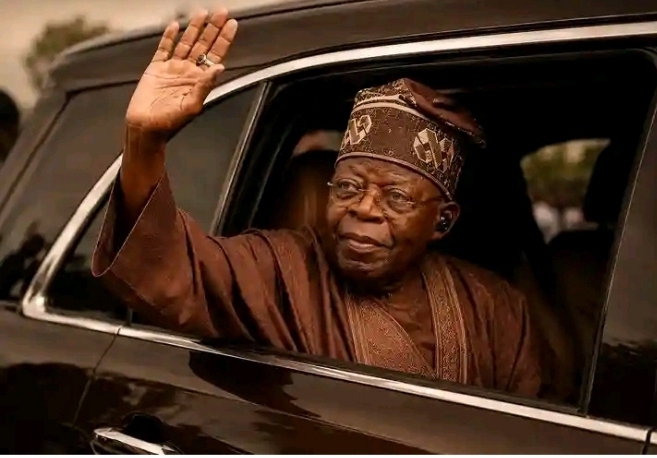
A Senior Advocate of Nigeria (SAN) and constitutional lawyer, Dr. Monday Ubani, has said President Bola Ahmed Tinubu was not legally required to submit his primary and secondary school certificates to the Independent National Electoral Commission (INEC).
Ubani said the omission does not invalidate Tinubu’s nomination for the 2027 presidential election.
He made the clarification on Wednesday during an interview on Frontline, a current affairs programme on Eagle 102.5 FM, Ilese-Ijebu.
His comments followed fresh debate over Tinubu’s educational credentials after former Kogi West Senator Dino Melaye alleged that the President did not include his primary and secondary school certificates among the documents submitted to INEC.
The controversy gained attention after INEC published the credentials of presidential candidates.
Ubani urged Nigerians to separate constitutional requirements from public expectations.
«”It is about the law, not about sentiment or bias, which I see flying about,” he said.»
He explained that Section 131 of the 1999 Constitution (as amended) only requires anyone seeking the office of President to have attained education up to school certificate level or its equivalent.
According to him, the Constitution does not compel candidates to physically submit their primary or secondary school certificates.
He added that judicial interpretations have established that evidence of attaining the required educational level is enough to satisfy the law.
«”There is no legal compulsion that a candidate must disclose or produce his certificate. It is only a moral issue and has nothing to do with legal compulsion,” Ubani said.»
He noted that while the omission of such certificates may raise transparency concerns, it does not amount to a constitutional breach.
The senior lawyer also argued that possession of a recognised university degree creates a legal presumption that the holder completed primary and secondary education unless proven otherwise.
«”If somebody has a degree, the presumption is that he must have passed through primary school, secondary school and university. It is for anyone challenging that qualification to rebut the presumption,” he stated.»
Ubani, however, said public office seekers should provide complete details of their educational qualifications in the interest of transparency and accountability.
On INEC’s role, he maintained that the Electoral Act does not empower the commission to verify or authenticate candidates’ academic credentials before publishing them.
He said INEC’s duty is limited to publishing candidates’ particulars, while anyone alleging false information must seek legal redress in court.
Ubani also addressed concerns over variations in the names appearing on the academic records of Labour Party presidential candidate Peter Obi.
He said name discrepancies do not automatically indicate wrongdoing but must be supported with relevant legal documentation.
«”It is an issue. Peter Obi has to explain the reason for the change. There must be a public document to support it,” he said.»