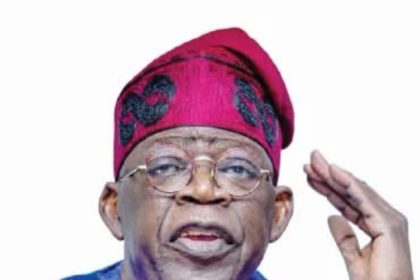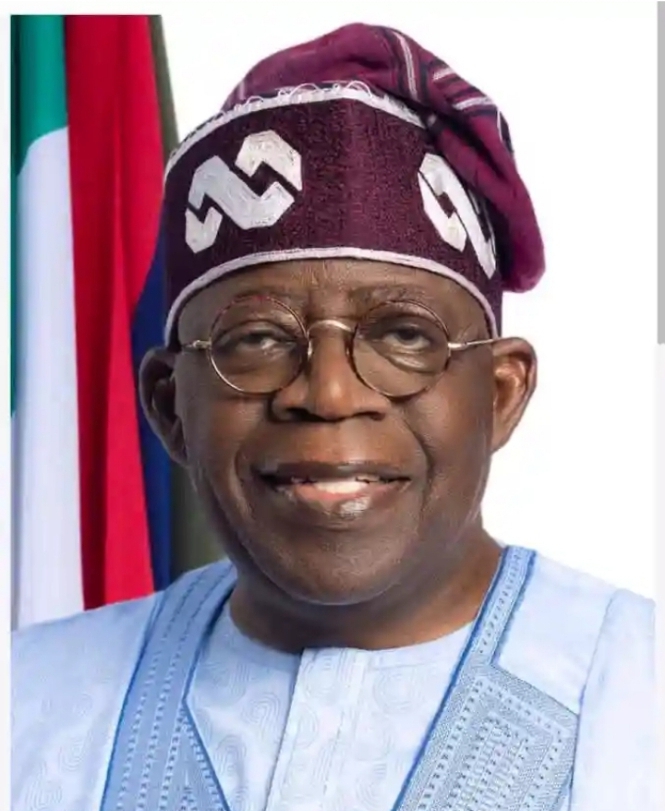
Since assumption of office in May 2023, President Bola Ahmed Tinubu has embarked on some of the most aggressive economic reforms in Nigeria’s democratic history. His administration removed fuel subsidy on the first day in office, floated the Naira, increased taxation through multiple revenue drives, expanded borrowing, and defended austerity policies as necessary steps toward long-term recovery.
However, while government officials argue that the reforms are painful but unavoidable, millions of Nigerians increasingly describe the period as one of unprecedented hardship, hunger, inflation, unemployment, insecurity and collapsing living standards.
Across markets, transport parks, campuses and workplaces, public frustration has deepened. Opposition parties, labour unions, civil society groups and social media commentators have repeatedly accused the administration of pursuing anti-people policies detached from the realities facing ordinary Nigerians.
One symbolic moment that captured this public anger was the widespread circulation of activist Martins Vincent Otse, popularly known as VeryDarkMan (VDM), who described the Tinubu administration as a failure
The speed with which his remarks gained the masses support reflected a broader public mood of economic fatigue and distrust toward Tinubu’s maladministration.
As the 2027 presidential election gradually approaches, the central political question is becoming unavoidable: Can President Tinubu secure re-election despite worsening socio-economic conditions, or will economic suffering override the traditional advantages of incumbency and APC political dominance?
This analysis applies data journalism techniques, historical voting trends, economic indicators, governance patterns and comparative political analysis to examine how current realities may shape Tinubu’s electoral prospects.
NIGERIA ECONOMIC PAINS, INFLATION AND FOOD CRISIS
Nigeria’s inflation crisis has become one of the strongest indicators of public dissatisfaction.
Since Tinubu assumed office, food prices have surged dramatically across all regions of the country.
Basic commodities such as rice, garri, beans, bread, yam and cooking oil have recorded price increases that many households can no longer sustain. Transportation costs also skyrocketed following fuel subsidy removal.
The National Bureau of Statistics (NBS) repeatedly reported inflation rates above levels considered manageable for low-income economies. Food inflation became particularly devastating because it directly affect survival for poor and middle-class Nigerians.
Data trends from major urban markets in Lagos, Kano, Port Harcourt, Abuja and Enugu show that average household spending on food now consumes over 60% to 70% of family income among low-income earners.
This economic reality has produced three major political consequences namely: Growing anger among urban youths; Lack of confidence on whatever President Bola Hamed Tinubu can promise Nigerian to lobby them for support. And the shopping for a replacement in another candidate
Historically, governments facing severe food inflation often suffer electoral backlash because hunger thumb down next election promises.
Citizens may tolerate corruption allegations temporarily, but prolonged inability to feed families tends to produce stronger anti-incumbent sentiments.
FUEL SUBSIDY REMOVAL: REFORM WITHOUT RELIEF
Tinubu’s supporters argue that subsidy removal was economically inevitable because Nigeria could no longer sustain the enormous fiscal burden.
Indeed, subsidy payments consumed trillions of Naira annually and were widely associated with corruption syndicates.
However, data analysis shows that public anger did not arise merely from subsidy removal itself, but from the absence of visible social cushioning after the policy.
Many Nigerians expected improvements in: Public transportation. Electricity supply. Healthcare Improved wages. Job creation. Infrastructure. Safety of Nigerians in all the six geopolitical zones of the country.
Instead of these to be addressed, most citizens experienced: Higher fuel prices, increased transport fares, soaring electricity tariffs, rising school fees, expensive healthcare, and a declining purchasing power.
The contradiction between “subsidy is gone” and “government is still borrowing heavily” weakened the general public as the people lack of confidence in the administration grows daily.
For many voters, the question became simple: if subsidy removal was meant to save Nigeria financially, why has borrowing continued aggressively?
This perception gap may become politically dangerous by 2027 if living conditions fail to improve substantially.
ENDLESS BORROWING AND PUBLIC DISTRUST
Nigeria’s debt profile has continued rising despite austerity measures.
Economic analysts note that borrowing itself is not always negative if linked to productive investments. However, Nigerians increasingly question the visibility and impact of the borrowed funds on the people and in infrastructure.
The comparisons between debt accumulation and infrastructure delivery reveal widening public skepticism.
Several roads remain abandoned.
Electricity generation remains unstable.
Public hospitals face underfunding.
Universities continue struggling.
Rail projects are almost none existing.
Consequently, many citizens perceive borrowing as enriching political elites rather than improving public welfare.
The lack of confidence in Tinubu administration grows when citizens compare: The rising government expenditure, luxury lifestyles of politicians, long convoy culture, expensive foreign trips while the masses languish in hunger and unaffordability of high cost of living.
This disconnect fuels the belief that ordinary Nigerians are bearing the pain while political elites remain insulated.
INSECURITY AND THE POLITICS OF FEAR
Security remains another major threat to Tinubu’s re-election prospects.
Kidnapping for ransom has expanded across highways, rural communities and even urban centres. Farmers increasingly abandon farmlands due to attacks by bandits and armed groups.
Data from security monitoring organisations indicate persistent violence in North-West, North-Central, South-East and parts of the South-South.
The political effect of insecurity is profound because it combines with hunger and unemployment to create public hopelessness.
In previous elections, insecurity often remained regional. However, current insecurity cuts across nearly all geopolitical zones, making it a national political issue rather than a sectional complaint.
When citizens feel unsafe, economic hardship becomes psychologically worse.
The APC may therefore face difficulty defending its security record nationally if kidnapping and violent attacks remain widespread as we approach the presidential election.
JUDICIARY, NATIONAL ASSEMBLY AND DEMOCRATIC CONFIDENCE
Another recurring criticism against the Tinubu administration involves perceived weakening of democratic institutions.
Opposition parties frequently accuse, the judiciary, the National Assembly, anti-corruption agencies, and security institutions of lacking sufficient independence from the executive arm.
Public perception matters heavily in democratic politics.
Even where institutions remain constitutionally functional, widespread lack of confidence on some critical institutions such as the Independent National Electoral Commission (INEC) and the judiciary as experienced in the People Democratic Party PDP, African Democratic Congress (ADC) internal crisis has led the general public to withdraw their support for Tinubu’s re-election
Social media data trends show growing cynicism among Nigerian youths regarding court judgments, legislative oversight, and anti-corruption prosecutions.
Many citizens increasingly believe political power determines institutional outcomes more than law or accountability.
Such perceptions may deepen voter apathy or provoke protest voting against Tinubu in 2027.
ELECTRICITY CRISIS AND ECONOMIC FRUSTRATION
Electricity supply remains one of Nigeria’s biggest governance failures.
Businesses continue relying heavily on generators despite repeated tariff increases.
Data comparisons show that many African countries with smaller economies generate more stable electricity than Nigeria.
The political implication is significant as small businesses struggle, manufacturing costs rise, unemployment increases and youth frustration deepens.
For many Nigerians, electricity represents the most visible symbol of state failure because its absence affects daily life directly.
If power supply remains poor by 2027, opposition parties will likely weaponise the issue aggressively during campaigns.
DOES APC’s CONTROL OF GOVERNORS GUARANTEE TINUBU VICTORY
President Tinubu currently benefits from one major political advantage: APC’s extensive control of state governments.
Historically, governors influence elections through political structures, local mobilisation, financial resources, grassroots patronage and electoral coordination.
However, data from recent global and African elections suggest incumbency advantages weaken significantly during severe economic crises.
Examples from Ghana, Kenya, Argentina, Sri Lanka, Senegal show that incumbency does not always guarantee victory.
In Nigeria itself, Goodluck Jonathan lost re-election in 2015 despite controlling federal power and multiple state structures.
The key lesson from electoral history is clear to the extend that when hardship becomes universal, elections gradually transform from elite contests into protest movements.
If inflation, hunger and insecurity continue worsening into 2027, governors alone may not neutralise mass voter anger.
YOUTH S, SOCIAL MEDIA AND THE VDM FACTOR
One emerging political trend is the growing role of digital activism and anti-establishment narratives.
The popularity of VDM’s criticism reflects deeper public frustration beyond partisan politics as social media analytics increasingly show the youth anger toward political elites, disbelief of government explanations.
This matters because Nigerian youths constitute a large voting demographic.
Although social media sentiment does not automatically translate into votes, it shapes national political mood, especially among urban voters.
Going memory lane one can remember that the 2023 elections demonstrated the growing power of online political mobilisation.
If economic conditions remain harsh, anti-government digital narratives may become even stronger before 2027.
WOULD NIGERIANS VOTE TINUBU AGAIN
The answer depends on one critical variables and whether Nigerians experience measurable improvement before the election. So if by 2027 inflation declines significantly, food prices stabilise, insecurity reduces, electricity improves jobs increase, wages rise, and infrastructure projects become visible then there could be hope of president Bola Tinubu return.
However, if current hardship persists or worsens, the election may evolve into a referendum on suffering and majority will vote the president out.
Analysis suggests that ordinary Nigerians increasingly evaluate governance through survival indicators rather than ethnic or partisan loyalty alone.
Thus the biggest threat to Tinubu re-election may therefore not come from opposition parties themselves, but from accumulated public exhaustion.
Even with over 30 governors, political structures may struggle against widespread economic pain if citizens believe government policies have become anti-people in practice.
Summarily, President Tinubu’s re-election prospects stand at the intersection of two competing forces:
The enormous institutional strength of incumbency and APC political dominance and the growing public anger driven by hardship, hunger, insecurity and distrust of Tinubu administration
Nigeria’s political history shows that incumbents remain powerful. But it also shows that prolonged economic suffering can destabilise even the strongest political structures.
Ultimately, the 2027 election may become less about party slogans and more about one question ordinary Nigerians will ask themselves:
“Are we living better than we were before?”
If the majority answer “No,” then no amount of political structure may fully guarantee victory.