There is growing controversy over the transfer of a Federal High Court suit seeking the disqualification of President Bola Ahmed Tinubu from the 2027 presidential election.
The suit was filed by the Centre for Reform and Public Advocacy at the Federal High Court in Kano and is marked FHC/K/CS/312/2026.
The plaintiffs allege that Tinubu submitted forged or conflicting academic documents to the Independent National Electoral Commission (INEC), including documents linked to Chicago State University.
The case also raises questions about the President’s educational qualifications and claims concerning his primary and secondary school history.
The plaintiffs specifically questioned Tinubu’s claim of attending Government College Lagos, arguing that the institution was established in 1974.
They contend that this conflicts with biographical records indicating that Tinubu would have completed secondary school around 1970.
According to the group, the timeline makes it impossible for the President to have obtained a legitimate secondary school certificate from the institution as claimed.
The sudden transfer of the case has drawn criticism from lawyers and civil society activists, who fear it could delay the determination of the matter.
Critics argue that moving the case at this stage, without a clear hearing date, could frustrate the plaintiffs’ efforts to obtain a judicial pronouncement before the 2027 election.
The controversy also revives longstanding questions over Tinubu’s academic records, which featured prominently during the 2023 presidential election.
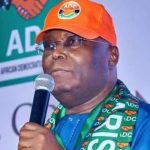
During that period, former Vice President Atiku Abubakar obtained a court order in the United States compelling Chicago State University to release records relating to Tinubu.
Tinubu’s lawyers had opposed the request, arguing that releasing the documents could cause severe and irreparable harm.
A US judge, however, ruled that Atiku had the right to access the records, stressing that the decision did not determine the merits of the allegations.
The latest case comes as political activities ahead of the 2027 presidential election intensify.
The plaintiffs maintain that the questions raised in the suit concern a constitutional requirement for presidential candidates.
Under the Nigerian Constitution, a presidential candidate must possess at least a School Certificate or its equivalent.