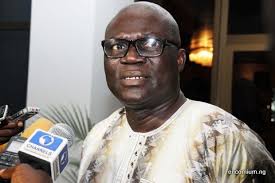
Reuben Abati – 9News Nigeria
It is sad that many Nigerians today talk glibly about the possibility of a coup or of military intervention in politics. They make it seem as if this democracy is something we can exchange for something else. We need to be reminded, as we celebrate democracy day 2017, how we got to this very moment, and how precious democracy is to us as a sovereign people. From 1966 to 1999 (with the short break of civilian rule from 1979 – 1983) the military dominated the political landscape in Nigeria. It was eighteen years ago yesterday when our country returned to civilian rule.
The military practically overstayed their welcome. The first military coup in Nigeria was in January 1966, followed by the counter-coup of July 1966, and then the civil war of 1967-70 which turned Nigeria into a military theatre more or less as the Federal forces engaged the Biafran secessionists in a fratricidal war that resulted in the loss of more than a million lives, starvation and the tearing apart of the Nigerian fabric. The military would remain in charge of Nigeria and its affairs for more than 30 years in total, and it is worth remembering that virtually every successful coup was welcome by the people.
It was thought particularly in the 70s that the military had a role to play in many developing countries in Africa to ensure stability and national discipline. The civilians who took over from the colonialists in Nigeria and Ghana, to cite two close examples, proved worse than their predecessors, and hence the usual argument for military intervention was corruption, and the need to keep the country together, and check the excesses of the civilian rulers. Military rule was perhaps closer to what the people had known traditionally and also under the colonialists. Kings or feudalists who did not tolerate any form of opposition, or free expression governed the traditional communities and likewise, the colonial masters were dictators. The military continued in that tradition. In-fighting among the emergent military elite and the competition for power eroded discipline, and resulted over the years in more coups.
To be fair, military intervention in Nigerian politics yielded some positive dividends, and created a leadership cadre, and indeed till date, the influence of the military in Nigerian politics, as seen in the transmutation of many military officers into professional politicians, remains a strong factor in the making and unmaking of Nigeria. But by 1990, with the global wave of democratization, glasnost and perestroika, the collapse of the Berlin wall, and the greater emphasis on human rights, and the rise of civil society, the Nigerian public began to subject the military to greater scrutiny than was hitherto the case.
After a fashion, every military government presented itself as a corrective regime, with the promise to hand over power in a short while to civilians. By 1986, the Babangida administration after a year in office had launched a political transition programme, beginning with the establishment of a 17-man Political Bureau. In 1989, the ban on political activities was lifted. The military junta would later ban these existing political parties and create its own parties, the Social Democratic Party and the National Republican Convention.
This seemingly endless transition programme and increased civil society activism merely drew more attention to the military and its record in the public sphere. The people began to demand an inevitable return to civilian rule. They complained about the human rights abuses of the military, the apparent domination of power by the Northern elite, the marginalization of other groups in Nigeria, and the spread of injustice and inequities.
When a Presidential election was held on June 12, 1993, and the SDP candidate, Chief MKO Abiola won the election- an election that was adjudged to be free and fair, Nigerians felt that the hour of their liberation from military rule had come. But the Babangida administration refused to announce the final results and subsequently, it annulled the election. It was a disastrous moment for the Nigerian military and the administration. It also marked the beginning of a national crisis that dragged on for six years. The Nigerian people were inconsolable. In the course of the crisis, General Ibrahim Babangida had to “step aside”, handing over power to an Interim national Government (ING), which was soon shoved aside by General Abacha. Between 1993 and 1999, Nigeria had three different leaders: Chief Ernest Shonekan, General Sani Abacha and General Abdusalami Abubakar.
The ensuing struggle for democracy was long and momentous. Progressive Nigerians and the civil society turned against the military. The South West declared that it had been robbed. MKO Abiola fought for his mandate. The international community ostracized the Abacha government. Nigeria became a pariah nation. The media was in the forefront of the struggle, and many journalists were jailed, hounded into exile, publishing houses were set ablaze. Anyone who criticized the soldiers was framed for one offence or the other and thrown behind bars.
The progressive forces insisted that the military must go. “Never Again”, the people chorused. There had been no other moment like that in contemporary Nigeria. The martyrs of that people’s revolution were the ones that died, including Chief MKO Abiola who died in Abacha’s detention camp, the many innocent persons who were shot by the military, and every one who suffered one major loss or the other. The heroes were the valiant men and women who stood up for democracy and justice and opposed military tyranny. The villains were the soldiers who trampled upon the people’s rights, and their opportunistic agents in civil society. On May 29, 1999, Nigeria returned to civilian rule. It was the day of our country’s second liberation, liberation from the “years that the locusts ate.”
In the month of June, there would be another historic date for Nigerians, that is June 12, a definite milestone in Nigerian democracy even if the Federal Government has been largely in denial since 1999. MKO Abiola deserves to be honoured post-humously not just selectively by states in the South-West but by the Nigerian Government as a kind of restitution, and by this, I mean a formal declaration, for record purposes, that he was indeed the winner of that June 12, 1993 election.
This brief excursion to the recent past is important because it is so easy to forget. I have met young Nigerians who have never heard of Chief MKO Abiola. In a country where history is no longer taught in schools, that should not be surprising. The Nigerians who were born in 1993 are today out of university, and many of them may never have experienced military rule. They were still children when their parents fought for this democracy. Whoever makes the mistake of even remotely suggesting any form of return to military rule is an enemy of the Nigerian people. Such persons would be taking this country back to 18 years ago and beyond.
Whatever may be the shortcomings of our democracy, this system of government has served the Nigerian people well. We may worry about the form or the shape, or the character of our democracy, the opportunism and imperfections of the professional political class, or the weakness of certain institutions but all told, this is a much better country. The best place for the military is to function under a constitutional order and to discharge its duties as the protector of national sovereignty. Any soldier who is interested in politics should resign his commission, and join a political party, politics being an open field for all categories of persons, including ex-convicts, prostitutes and armed robbers. I find the auto-suggestion of military intervention gross and odious. It is regrettable that those whose duty should never in any shape include scare-mongering were the ones who started that nonsensical discussion in the first place.
For the benefit of those who do not know or who may have forgotten, we once lived in a certain country called Nigeria, ruled by the military, where the rights of citizens meant nothing. The soldiers were our rulers. They were above the laws of the land. The people were their subordinates. They called us “bloody civilians.” The media was not free. Your insistence on free speech could land you in jail. Under the guise of enforcing discipline, the military treated the people as if they were slaves. Everything was done “with immediate effect!”, including the suspension of human rights.
Today, democracy has given the Nigerian people, voice. There is a greater consciousness of the power of the people, as well as the need to hold persons in power accountable. The electoral process is still imperfect, but the people are now supremely confident of their right to choose. But not all our problems have been solved. For example, exactly 50 years ago today, the late Emeka Odumegwu-Ojukwu, hero of the Biafran Revolution, led the people of the Bight of Biafra on a secession move out of Nigeria.
He said: “…you, the people of Eastern Nigeria, Conscious of the Supreme Authority of Almighty God over all mankind, of your duty to yourselves and prosperity; Aware that you can no longer be protected in your lives and in your property by any Government based outside Eastern Nigeria/Believing that you are born free and have certain inalienable rights which can best be protected by yourselves. Unwilling to be unfree partners in any association of a political or economic nature… Now, therefore, I, Lieutenant-Colonel Chukwuemeka Odumegwu-Ojukwu, by virtue of the authority and pursuant to the principles recited above, do hereby solemnly proclaim that the territory and region known as and called Eastern Nigeria together with her Continental Shelf and territorial waters shall henceforth be an independent sovereign state of the name and title of The Republic of Biafra…”
In other words, the people of Eastern Nigeria no longer felt free or protected or respected inside Nigeria. They opted out. In the Ahiara Declaration of 1969, Ojukwu summed it all up as follows: “When the Nigerians violated our basic human rights and liberties, we decided reluctantly but bravely to found our own state, to exercise our inalienable right to self-determination as our only remaining hope for survival as a people.”
The civil war ended on January 12, 1970 but 50 years since the declaration of secession by the people of Eastern Nigeria, Igbos are still protesting about their relationship with the rest of Nigeria. But significantly, they are not the only ones complaining. Farmers are complaining about pastoralists, indigenes about settlers, Christians about Muslims and vice versa, women about men, men about women, youths about the older generation, the people of Southern Kaduna are unhappy, other Northern minorities too, the people of the Niger Delta have been unhappy since the Willink Commission of 1957/58, the other over 400 ethnic nationalities that are not recognized in Section 55 of the 1999 Constitution are also wondering whether they are truly part of this union…Basic human rights and liberties are still being violated.
Nigeria remains a yet unanswered question. Democratic rule may have opened up the space, but our country still suffers from a kind of hang-over. The people are free, but they are today everywhere in chains: politically, economically and ethnically. This is the sad part of our democracy, but the best part are the many lessons that the people are learning about the meaning, the nature and the cost of the choices that they make or that they have made.