🟢 An Editorial Insight into Global Stability, Energy Security And The Future Of Middle East Diplomacy
By Princely Onyenwe
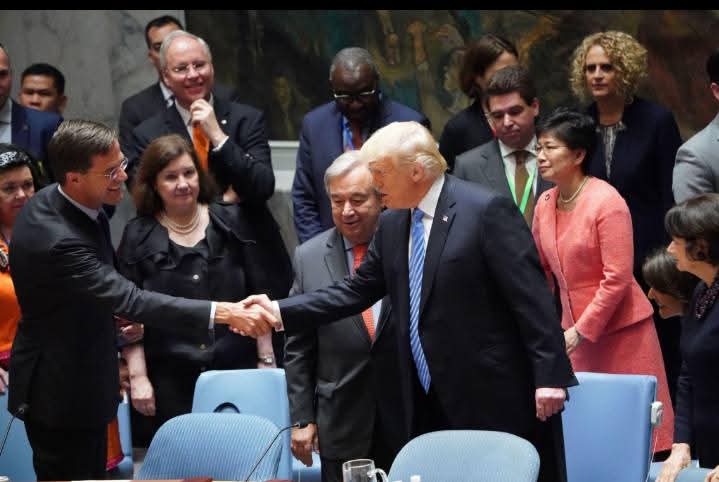
The signing of a Memorandum of Understanding (MoU) between United States President Donald Trump and Iranian President Masoud Pezeshkian in Versailles, France, may prove to be one of the most consequential diplomatic developments of the decade. Facilitated by French President Emmanuel Macron, the agreement seeks to halt months of hostilities between Washington and Tehran and establish a framework for a broader peace settlement expected to be negotiated in the coming weeks.
Beyond the symbolism of rival nations choosing dialogue over confrontation, the significance of the agreement lies in its potential impact on global security, economic stability, energy markets, and international diplomacy. For a world increasingly weary of conflicts and geopolitical uncertainties, the Trump-Iran peace initiative offers a rare glimpse of hope.
One of the immediate benefits of the agreement is the reopening of the Strait of Hormuz, a maritime corridor through which nearly 20 percent of the world’s oil supply passes. The disruption of activities in the waterway had sent shockwaves through international markets, driving up shipping costs and fueling concerns about energy security. With Iran committing to restore safe passage for commercial vessels, businesses and governments across continents are expected to benefit from improved supply chains and reduced transportation risks.
The global economy also stands to gain significantly. Rising oil prices resulting from the conflict had contributed to inflationary pressures in many countries, including developing economies already struggling with debt burdens and slow economic growth. The prospect of normalized oil exports and uninterrupted shipping activities is expected to ease market anxieties, stabilize energy prices, and support economic recovery efforts worldwide.
For Europe, Asia, Africa, and the Americas, the agreement presents an opportunity to avoid the economic fallout of a prolonged Middle Eastern conflict. Nations heavily dependent on imported energy resources are particularly hopeful that the peace framework will prevent future disruptions capable of triggering another wave of inflation and economic hardship.
Another critical dimension of the memorandum concerns Iran’s nuclear programme. Tehran’s reported commitment to cooperate with international oversight mechanisms and refrain from pursuing nuclear weapons has been welcomed by many governments and international organizations. While the details remain subject to further negotiations, the development could reduce fears of nuclear proliferation in one of the world’s most volatile regions.
The diplomatic breakthrough also reinforces the value of negotiation as a tool for conflict resolution. For years, relations between the United States and Iran have been characterized by sanctions, mutual distrust, proxy confrontations, and military threats. The willingness of both governments to return to the negotiating table demonstrates that diplomacy remains a viable alternative to warfare, even after periods of intense hostility.
From a geopolitical perspective, the agreement could help reduce tensions across the broader Middle East. Regional conflicts often draw in multiple actors, creating risks of wider instability. A successful peace process between Washington and Tehran could encourage dialogue among other rival powers and contribute to a more stable security environment throughout the region.
The global community’s expectations are understandably high. Governments, investors, humanitarian organizations, and ordinary citizens hope that the memorandum evolves into a binding peace agreement capable of delivering lasting stability. Many are looking for tangible progress on sanctions relief, nuclear verification, maritime security, and mechanisms to prevent future confrontations.
However, caution remains necessary. History has shown that peace agreements are often tested by political opposition, security concerns, and competing strategic interests. Significant issues remain unresolved, including regional security arrangements, the implementation of sanctions relief, and verification procedures relating to Iran’s nuclear commitments. These challenges will require patience, trust-building, and sustained diplomatic engagement.
Nevertheless, the Versailles agreement has already achieved one important objective: it has shifted the conversation from war to peace. In a period marked by geopolitical tensions and economic uncertainty, that alone represents a significant achievement.
If the coming negotiations succeed, the Trump-Pezeshkian Memorandum of Understanding may be remembered not merely as a temporary ceasefire but as the beginning of a new chapter in Middle Eastern diplomacy. The world will be watching closely, hoping that this moment of dialogue ultimately delivers what decades of confrontation could not—lasting peace, regional stability, and shared prosperity.
For more inquiries on this news contact 9News Nigeria on +234 08036856526