A coalition of opposition figures has officially adopted the African Democratic Congress (ADC) as its platform to unseat the ruling All Progressives Congress (APC) in the 2027 general elections.
Yet, despite the formidable alignment, the group remains fractured over who should fly the coalition’s presidential flag.
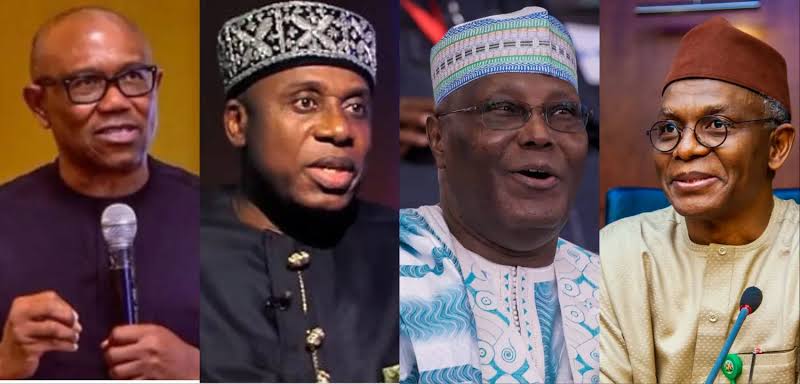
Former Vice President Atiku Abubakar, former Anambra State Governor Peter Obi, ex-Kaduna Governor Nasir El-Rufai, and former Transport Minister Rotimi Amaechi are among the powerful bloc that endorsed ADC as the coalition’s official party.
Former Senate President David Mark was immediately appointed interim national chairman, while Rauf Aregbesola, former Minister of Interior, was named interim national secretary.
However, behind the scenes, fierce jockeying for the sole presidential ticket is threatening to unravel the alliance.
Atiku, during a recent closed-door session, reaffirmed his readiness to return to the ballot and criticized the ruling party’s corruption record.
“We will decisively deal with anyone who says he will steal or engage in any corrupt practice… Enough is enough,” He declared.
Peter Obi’s camp, however, has presented a one-term presidential proposal rooted in integrity, positioning him as the coalition’s natural frontrunner.
Former Jigawa State Governor Sule Lamido cautiously backed Obi’s aspirations, stating, “Leadership should be about competence and vision, not geography. I’ll support those who share that goal.”
Despite the optics of an alliance, consensus remains elusive.
El-Rufai was said to have advocated for the Social Democratic Party (SDP) as an alternative platform, a pitch that briefly stirred divisions within the coalition before ADC was formally chosen.
The tensions have now spilled into the public domain, as a faction of longstanding ADC members rejected the coalition’s adoption of the party, describing it as a hijack.
“The ADC is not a private platform for elite deals,” said a spokesperson of the dissenting group.
The absence of a clearly defined selection process for the presidential ticket has left the coalition in limbo.
Talks of a consensus candidate remain inconclusive, while the risk of parallel ambitions threatens the structure they are attempting to build.
What began as a political realignment is quickly evolving into a test of political maturity.
As the clock ticks toward the 2026 primaries, the opposition may have chosen a common vehicle, but the driver’s seat is still wide open.