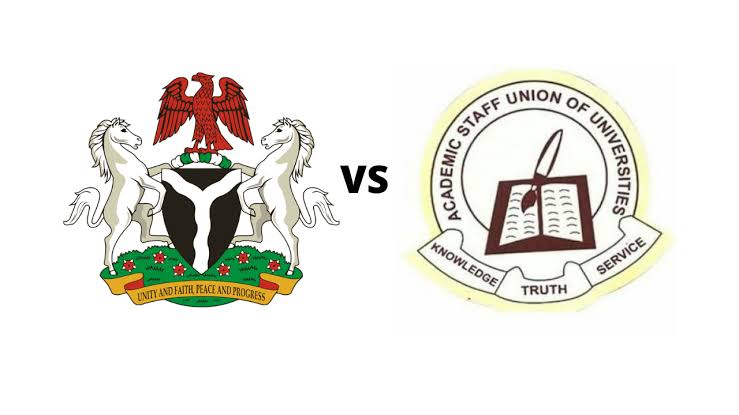
The two-week warning strike declared by the Academic Staff Union of Universities (ASUU) has once again stirred anxiety among Nigerian students, parents and education stakeholders.
Though announced as a “short-term industrial action,” the strike’s potential consequences could ripple far beyond its stated duration if negotiations between the union and the Federal Government stall.
The Major Issues
Most federal universities are currently in various stages of the 2024/2025 academic session.
A prolonged strike could halt lectures, examinations and research work, forcing institutions to extend their academic calendars.
Another effect of this is that final-year and postgraduate candidates, could face delays in graduation, project defense and mobilization for the National Youth Service Corps (NYSC).
Additionally, for postgraduate students and lecturers, a strike halts access to laboratories, field research, and academic supervision. In some cases, years of research progress are lost.
Financially, this industrial action will cause a strain. Many students living off-campus continue to pay rent, feeding and utility bills, even when lectures are suspended.
Parents and guardians are equally burdened by the uncertainty, particularly those funding their wards in multiple universities.
Another Decline in Educational Quality
Frequent interruptions have long undermined the quality of university education in Nigeria.
Each strike erodes students’ academic rhythm and motivation, leading to disengagement and in some cases, permanent dropout.
Employers have often cited this as a reason for the declining quality of graduates.
Brain Drain & Institutional Fatigue
Extended strikes contribute to the ongoing brain drain in Nigeria’s academic sector.
A number of lecturers, frustrated by unpaid salaries and inconsistent government policy, seek better opportunities abroad.
This not only weakens Nigeria’s research base but also widens the gap between local and global academic standards.
Possible Outcomes
If the government and ASUU resolve their differences within the warning period, universities may resume without significant setbacks.
However, if the strike evolves into a full-blown industrial action, it could delay the ongoing session well into 2026.
Unless the government institutionalizes consistent dialogue and full implementation of agreements, Nigeria’s university system will remain trapped in recurring cycles of strikes.