By Abubakar H. Muhammad (9News Nigeria, Northeast)
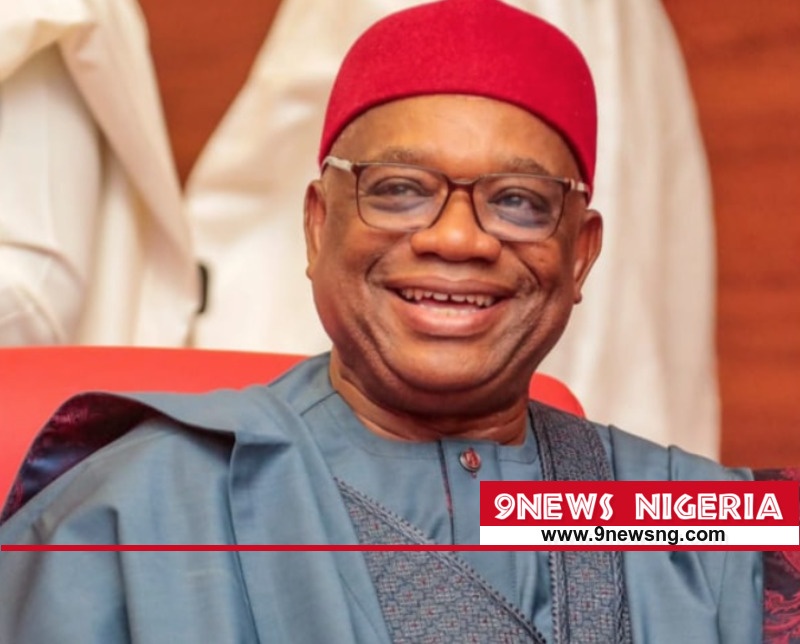
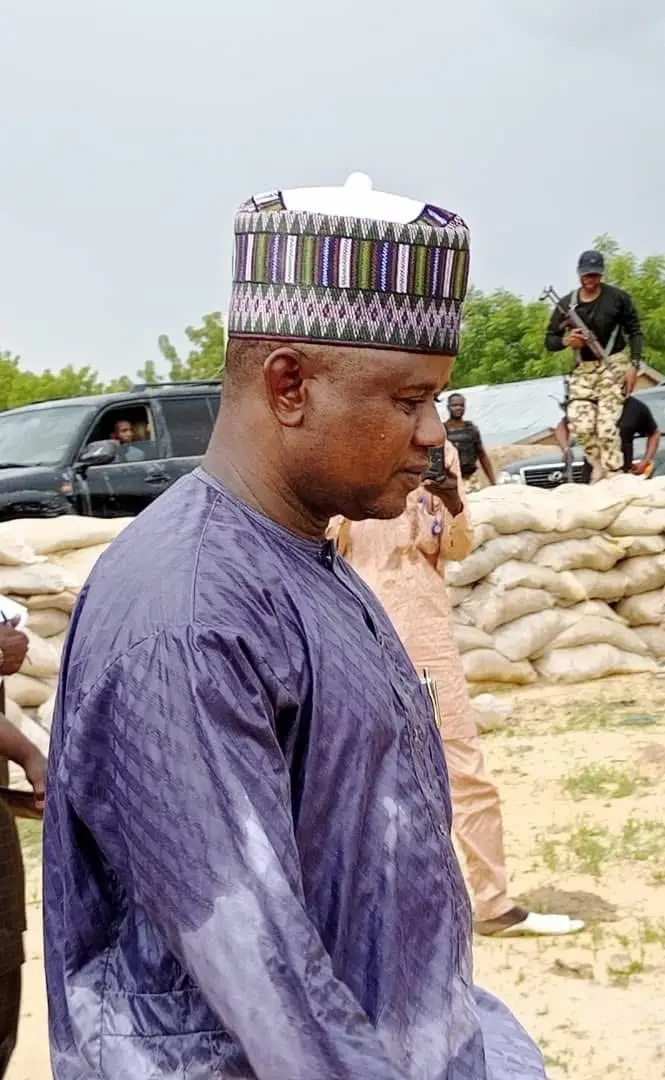
In a state shaped by destruction and rebuilding, Mustapha Gubio has earned a title that fits – Borno’s Chief Builder.
From the aftermath of insurgency to new housing projects, Gubio has spent the past decade translating policy into homes, schools, and basic services.
Now, as the consensus governorship candidate of the All Progressives Congress for 2027, he faces a larger task – moving Borno beyond recovery if elected.
That raises a central question: can he deliver on that scale?
His record in public service offers part of the answer.
From site engineer to state architect
Gubio’s work in government began during Borno’s humanitarian crisis under Governor Babagana Umara Zulum.
As Commissioner for Reconstruction, Rehabilitation and Resettlement, he was tasked with returning displaced families to communities affected by Boko Haram.
In Ngarannam, 804 families were resettled with housing and support packages that included livestock, cash, food, and clothing.
The project drew national attention and was commissioned by the presidenFrom In Auno, about 24 kilometers from Maiduguri, he delivered 500 housing units designed to reflect local living patterns.
The houses included features such as external toilets, extended family space, and access to water through boreholes.
Across Bama, Konduga, Damasak, and Mafa, the effort expanded to schools and clinics as part of rebuilding local systems.
For Gubio, reconstruction meant restoring both shelter and public services.
Turning liabilities into assets
At the Ministry of Works and Housing, Gubio faced a different challenge – abandoned housing projects.
Sites in Bakassi GRA and Teacher’s Village in Pompomari had stalled despite significant public spending.
He introduced a public-private partnership with Thinklab Group Limited to complete 594 housing units.
The state provided existing structures as equity, while the private partner handled infrastructure such as roads, power, and water.
The agreement allowed the government to recover value without new spending.
Gubio described the projects as housing solutions for displaced persons, low-income families, and civil servants.
The rural footprint
His Rural Housing Transformation program extended development beyond Maiduguri.
The plan delivered 100 housing units in each of six local government areas.
During inspections in Biu and Azare in Hawul, he emphasized the need for roads and drainage alongside housing.
He maintained that access is as important as shelter.
In total, his projects account for more than 2,400 housing units across the state.
The developments followed a consistent model that included water access, privacy, and community-based design.
The task ahead
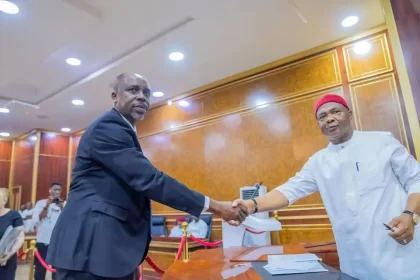
After purchasing APC nomination forms, Gubio was endorsed by Governor Zulum as a preferred successor.
He later received backing from Vice President Kashim Shettima and other party stakeholders.
Public support was visible during his return to Maiduguri, where large crowds gathered.
Zulum said the decision reflects a need to sustain development efforts since 2019.
For Gubio, the next phase involves expanding beyond housing.
Borno still faces a housing gap, ongoing displacement, youth unemployment, and economic limitations.
Addressing these issues will require investment in infrastructure, jobs, and local markets.
His construction background could support job creation, especially for young people.
Policies such as reserving a share of project labor for apprentices could build skills.
Linking rural housing to small-scale industry and agriculture could also create income opportunities.
The broader challenge is shifting from recovery to growth.
Gubio’s record shows experience in rebuilding structures, but the next test is building systems that sustain them.
Borno’s long-term progress will depend not only on infrastructure, but on people, skills, and economic activity.