By Obinna Ejianya
The controversy surrounding the so-called Presidential Foreign Intervention Promotion Council (PFIPC), alternatively referred to in some reports as the Presidential Economic Advisory Council (PEAC), has left many Nigerians in a state of doubt, confusion and growing scepticism. As allegations continue to collide with official denials, many citizens are asking themselves whether they should simply accept the government’s explanation or dig deeper into the facts. For some, this is yet another moment that reinforces a determination not to continue living in what they describe as a “fool’s paradise,” especially in an era where official narratives are often met with public suspicion and demands for greater transparency.
According to what has now become known as the Gbajabiamila Gate scandal, a man identified as Prince Adeniyi Adeyemi Matthew allegedly created a fictitious government agency known as the Presidential Foreign Intervention Promotion Council (PFIPC), appointed himself as its Director-General, secured office accommodation within the Federal Secretariat, opened an account with the Central Bank of Nigeria (CBN) in the agency’s name, became associated with a ₦1,302,978,784 allocation in the 2026 Appropriation Act, summoned ambassadors to meetings, held strategic engagements with ministers, and even reportedly represented Nigeria at international conferences.
The Presidency has maintained that no such agency exists under the Federal Government and has described its alleged Director-General, Prince Adeniyi Adeyemi Matthew, as an impostor now facing criminal prosecution. On the surface, the official position appears straightforward: an individual allegedly forged documents, deceived government institutions, and falsely represented himself.
That contradiction is precisely what makes this controversy so remarkable—and why it deserves a thorough forensic examination. If the agency never existed, how did it appear to function in ways ordinarily reserved for legitimate government institutions?
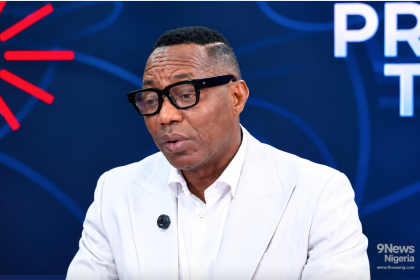
PFIPC Probe: Falana Condemns Arrest of Suspect’s Father
How did an entity described as “non-existent” reportedly obtain office accommodation, interact with ministries, host diplomatic engagements, appear in official correspondence, recruit personnel, and become associated with a budget allocation exceeding ₦1.3 billion?
While the official narrative characterizes the situation as a solo criminal enterprise by Adeniyi Adeyemi Matthew, a forensic examination of the administrative trail suggests a systemic failure in Due Diligence. The complexity of the operation, which involved securing office space in the Federal Secretariat and engaging high-ranking diplomats, points toward a significant collapse of the internal vetting processes mandated by the Public Procurement Act and standard civil service protocols.
Key Findings: The Anatomy of an Institutional Breach
An objective synthesis of the documented evidence regarding the Presidential Foreign Intervention Promotion Council (PFIPC) reveals several critical anomalies that contradict the “lone wolf” theory of the scandal:
- Administrative Legitimization: Despite being labeled “non-existent,” the council reportedly secured physical office space within the Federal Secretariat, a process that usually requires rigorous clearance from the Office of the Head of Civil Service.
- Budgetary Integration: Most notably, the agency was linked to a ₦1,302,978,784 allocation within the 2026 Appropriation Act, indicating a breach in the Budget Office of the Federation‘s vetting cycle and highlighting potential Nigeria budget fraud.
- Diplomatic Penetration: Adeniyi Adeyemi Matthew successfully convened meetings with foreign ambassadors and represented Nigeria at international forums, bypassing the standard Due Diligence protocols of the Ministry of Foreign Affairs.
- Financial Access: The council allegedly opened an account with the Central Bank of Nigeria (CBN), a feat that requires formal documentation and authorization rarely accessible to private citizens.
The Role of the Chief of Staff and Executive Oversight
The Presidency has moved swiftly to insulate the Chief of Staff to the President from the fallout, asserting that no official authorization was ever granted for the creation of the PFIPC. However, in the Nigerian governance structure, the Federal Executive Council (FEC) and the Office of the Chief of Staff serve as the primary gatekeepers for all presidential initiatives.
The primary investigative concern is not merely the intent of the alleged impostor, but the failure of these gatekeeping mechanisms. If an individual can manufacture an entire government department and gain access to state resources, it suggests that the Institutional Safeguards designed to prevent Nigeria budget fraud have been effectively bypassed or neutralized.
Financial Discrepancies and the 2026 Appropriation Act
The inclusion of over ₦1.3 billion for a fraudulent council in the 2026 Appropriation Act represents a catastrophic failure of the legislative and executive budget review process. Budget lines do not appear in a vacuum; they undergo multi-level scrutiny by the Budget Office of the Federation and relevant committees in the National Assembly.
This specific finding elevates the Gbajabiamila Gate scandal from a case of personation to a matter of potential high-level state capture. The Economic and Financial Crimes Commission (EFCC) must determine at which stage of the budget preparation this “ghost” allocation was inserted and who provided the necessary administrative cover for its inclusion.
Diplomatic and Recruitment Irregularities
The scale of the PFIPC’s operations extended to human resources and international relations. Reports indicate that recruitment processes were conducted under the guise of official government business. For a ghost agency to issue appointment letters that carry the weight of state authority, it must exploit existing loopholes in the verification systems used by the Federal Executive Council (FEC).
Furthermore, the participation of the diplomatic corps in PFIPC-led engagements suggests a high level of “optical legitimacy.” Without high-level internal verification, it is unlikely that seasoned foreign representatives would have engaged with Adeniyi Adeyemi Matthew in his capacity as Director-General. This underscores the urgent need for a total overhaul of how presidential councils are gazetted and communicated to external stakeholders.
Conclusion: Restoring Institutional Integrity
According to metrics from Transparency International, administrative corruption often thrives in environments where oversight is centralized and opaque. The Gbajabiamila Gate scandal serves as a wake-up call for the Nigerian government to digitize its agency registry and enforce stricter adherence to the Public Procurement Act.
The ongoing investigation by the Economic and Financial Crimes Commission (EFCC) must look beyond the immediate criminal charges against Adeniyi Adeyemi Matthew. To restore public trust, the government must provide a transparent account of the administrative lapses within the Budget Office of the Federation and the Presidency that allowed a fictional council to be treated as a legitimate arm of the state. Only through such forensic accountability can Nigeria protect its 2026 fiscal year and beyond from similar institutional exploitations.