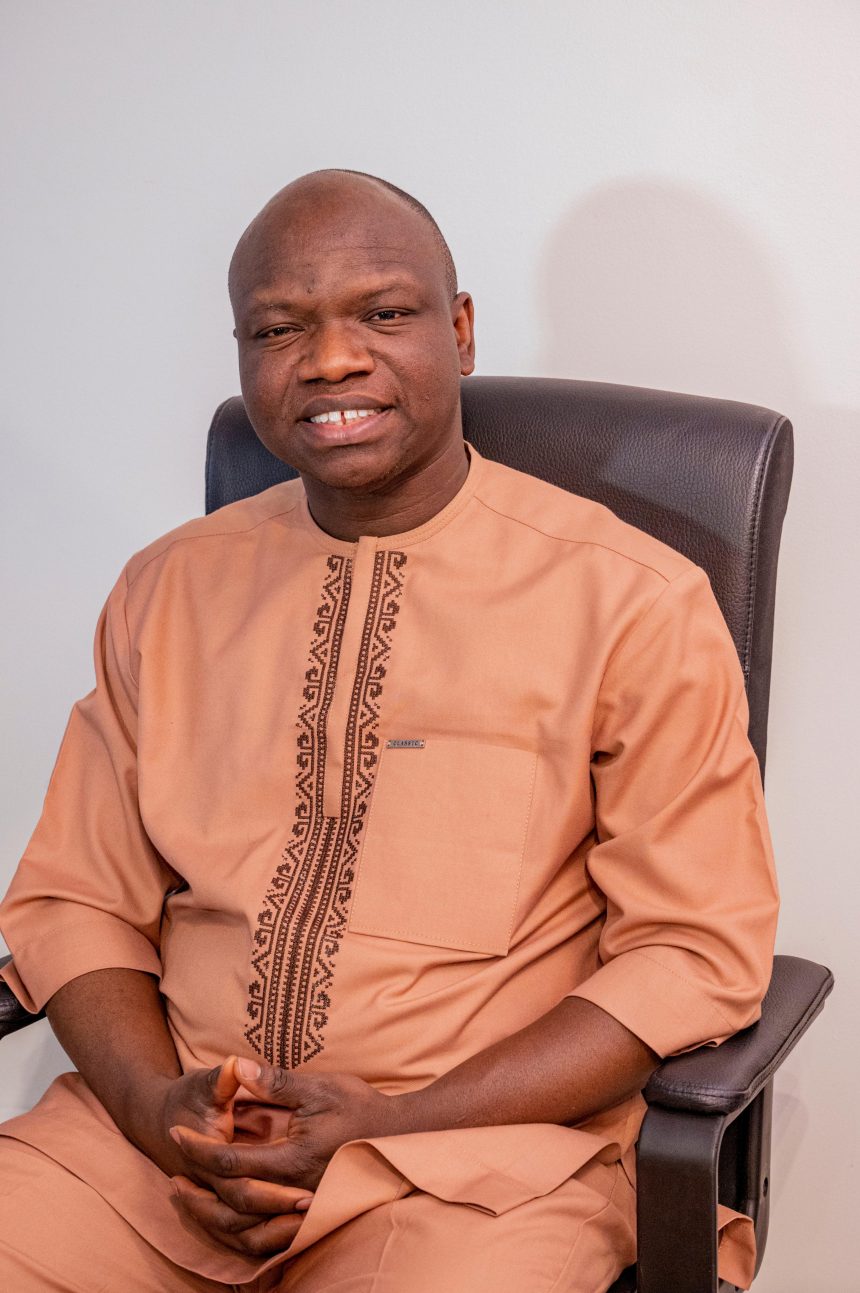
Nigeria stands at a dangerous crossroads. While advanced nations consolidate their prosperity, millions at home are still locked in daily battles against hunger, joblessness, skyrocketing food prices, insecurity, and broken primary healthcare. It is at this breaking point between what Nigeria could be and what its people are forced to endure that Daniel Affis Popoola says he can no longer sit on the sidelines. The African Action Congress gubernatorial hopeful for Oyo 2027 is not a career politician. He is an industrialist with twenty years inside factories across three continents. And he is running on a single, audacious promise: to make the people of Oyo the richest class of Nigerians.
Popoola’s vision for the state is unapologetically expansive. He does not speak of managing poverty, but of creating wealth at such scale that an Oyo resident could afford to choose between two well-paying jobs. He envisions “Made in Oyo” goods standing shoulder-to-shoulder with products from the United States, Canada, and China on the global stage, much like Nigerian music does today. He sees a state where no child goes to bed hungry for lack of food, or to school on an empty stomach. In his Oyo, roads are not just tar and concrete. They are economic arteries, designed to move people to work, lined on the left and right by hundreds of factories that turn the state’s raw materials into finished products and paychecks.
What drives him, he says, is pain he cannot unsee. He is haunted by the young Nigerians, especially from the South West, who risk death crossing deserts in search of a better life. He is moved by the Nigerian domestic worker trapped in an Arab country, cleaning floors and weeping with hopelessness. He carries the anguish of the market woman whose profit is swallowed by inflation, the hawking trader under the sun, the ageing father without pension, and the boys and girls at home or abroad who sell their bodies because they see no other way. He thinks of the Nigerian harassed in foreign lands, enduring daily indignation, and of the laboring mother and sick child who queue for hours to see a doctor. He feels the frustration of the Oyo and Oke-Ogun farmer for whom a single tractor could mean the leap from subsistence to commercial production. To all of them, those at home and those scattered abroad, his message is simple: do not despair. “You can have a better life right here at home in Oyo State,” he says. “Oyo is full of great kings and monarchs. There are fewer kings in Europe, America, and the West. Nigeria, particularly Oyo State, ni ilu Oba — Country of Kings. Oyo will set the pace for the rest of Nigeria.”
That pace, in Popoola’s blueprint, begins with wages and food. “Today, the minimum wage cannot buy a bag of rice. What a shame!” he declares. He pledges to work around the clock to ensure Oyo State has the highest minimum wage in Nigeria, restoring dignity to work and putting purchasing power back in people’s hands. Agriculture, the state’s historic strength, would be revived not with hoes and cutlasses, but with extensive mechanized farming designed to make Oyo first in West Africa again. To connect workers to opportunity, his administration would launch a dedicated, government-facilitated job website, a digital clearing house for a labor market he intends to flood with openings. His projection is staggering: there will be more jobs than the unemployed.
For Popoola, this is the baseline, not the ceiling. “Our goal is to eradicate suffering from Oyo State and put money in your pocket so that you don’t just live, but thrive,” he says. “This is just the minimum expectation you can have of us. Others will be discussed some other time.”
It is a campaign born not from political calculation, he insists, but from the conviction that serious and honorable men have watched too long as politicians without ideas, will, or capacity failed to fix basic but significant issues.
At a moment when Nigeria confronts insecurity, hunger, and unemployment, Popoola is bracing Oyo for something more fundamental: food security, industrial jobs, healthcare that works, and the return of dignity.
He is betting that a state that once set the pace for Western Nigeria can do so again, not with slogans, but with factories, tractors, and wages that can buy more than a bag of rice.
In his telling, the Oyo dream is not nostalgia. It is engineering and he is asking for four years to build it.