The Oval Office is more than just a workspace; it is the most powerful room in the world.
Every handshake, every meeting, every word uttered within its walls carries a weight that can shift global markets, strengthen alliances or even alter the course of history.
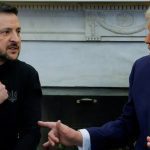
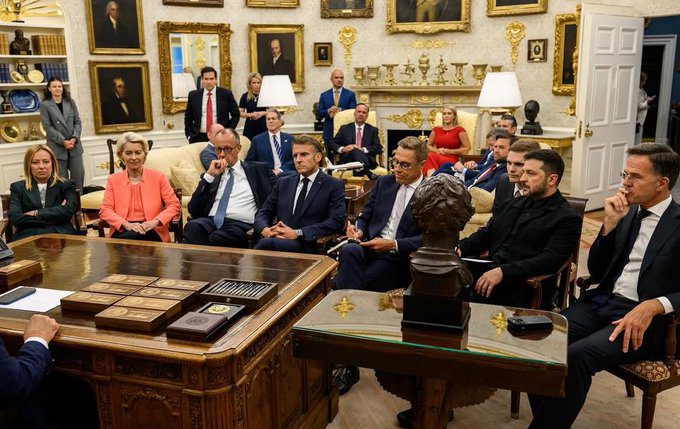
The recent meeting inside the Oval Office once again emphasized the sheer influence of the U.S. presidency.
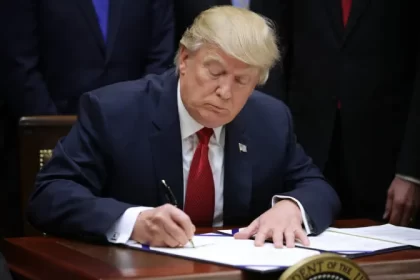
Seated behind the Resolute Desk, the president presided not merely as a head of state, but as the embodiment of American power.
For visiting dignitaries, that seat commands respect; an unspoken reminder that decisions made here ripple far beyond U.S. borders.
Throughout history, U.S. presidents have demonstrated how singularly influential the office is.
In October 1962, John F. Kennedy used this very room to weigh the world’s future during the Cuban Missile Crisis; his decision to enforce a naval blockade against the Soviet Union is still remembered as one of the most consequential acts of brinkmanship in modern history.
Decades later, Ronald Reagan turned the Oval Office into a stage for global persuasion, famously demanding, “Mr. Gorbachev, tear down this wall!”
His words, broadcast across the globe, reinforced America’s role in reshaping the course of the Cold War.
George W. Bush, in the aftermath of the September 11 attacks, addressed a shaken nation from the Oval Office, rallying America for a global war on terror.
His message was not just to U.S. citizens but to the entire world, signaling that America would respond with overwhelming force.
More recently, Barack Obama used the same desk to authorize the daring 2011 raid that led to the death of Osama bin Laden, an operation that required secrecy, precision, and the president’s final word.
Unlike many leaders who operate under the constraints of coalition governments or ceremonial powers, the U.S. president stands as both commander-in-chief of the world’s most formidable military and steward of the largest economy on earth.
A single executive order can transform domestic policy overnight; a presidential statement can send shockwaves across continents.
One senior White House aide said; “The Oval Office is where history bends”.
This in its whole emphasizes the president’s role as both a global statesman and a domestic decision-maker.
From authorizing military action to negotiating billion-dollar trade agreements, the U.S. president wields an authority unmatched by any other democratic leader.
The symbolic design of the Oval Office itself, with no corners, only continuity reflects the ceaseless nature of presidential power.
For allies and adversaries alike, an invitation to the Oval Office is more than diplomacy; it is a signal.
It tells the world who stands closest to American influence and who has the ear of the most powerful individual alive.
As the meeting concluded and the heavy doors of the Oval Office closed, one reality was clear: in a world of shifting powers, the U.S. presidency remains the single most consequential office in existence, with its occupant, the ultimate decider on matters of war, peace, and prosperity.