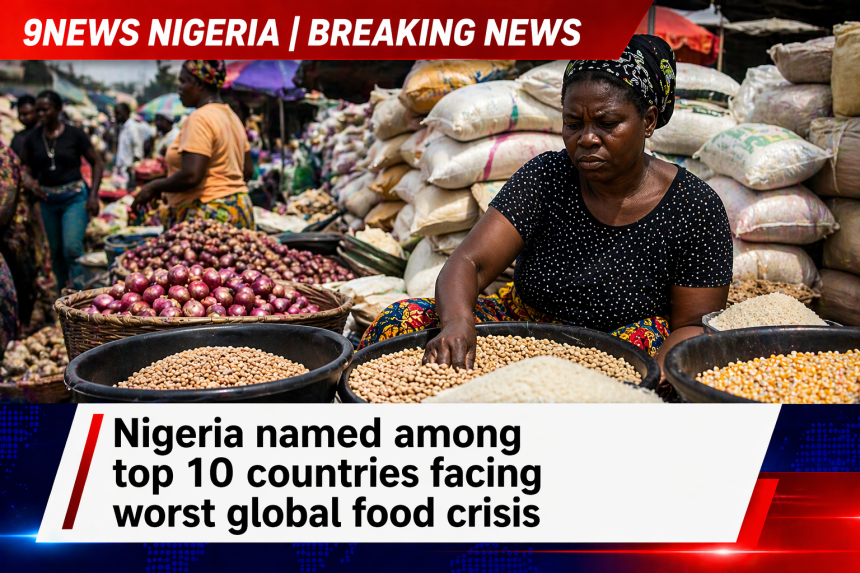
Nigeria has been listed among the countries bearing the brunt of the world’s worsening food crisis, as a new global assessment warns that hunger levels are rising sharply across vulnerable regions.
9News Nigeria reports that the latest Global Report on Food Crises (2026) identified Nigeria as one of the countries experiencing a significant surge in food insecurity, driven by a mix of conflict, economic pressure, and declining humanitarian support.
According to the report, about 266 million people across 47 countries faced acute food insecurity in 2025, with projections showing conditions may deteriorate further in 2026. Nigeria is among the nations expected to record a major increase in hunger levels amid these global pressures.
Experts attribute Nigeria’s worsening situation to a combination of persistent insecurity, especially in the northern regions, economic instability, and climate-related shocks affecting food production. Armed conflicts and displacement have continued to disrupt farming activities, while inflation and currency depreciation have pushed food prices beyond the reach of many households.
Separate projections from global food agencies indicate that up to 35 million Nigerians could face severe hunger in 2026, marking one of the highest figures on the African continent.
The humanitarian outlook is further complicated by funding shortfalls. Reports show that global food assistance has declined significantly, with humanitarian aid dropping by nearly 40 percent in recent years, limiting the ability of agencies to respond effectively to growing needs.
Within Nigeria, the crisis is already visible in several states, particularly in the North-East, where millions of displaced persons depend heavily on aid. Health facilities in affected regions are reporting rising cases of child malnutrition, with humanitarian groups warning of long-term consequences if urgent interventions are not scaled up.
Beyond conflict, climate change is emerging as a major driver of food insecurity. A recent United Nations-backed assessment warned that extreme heat and erratic weather patterns are reducing crop yields and threatening food systems across sub-Saharan Africa, including Nigeria.
The report underscores a broader global trend in which food insecurity is no longer confined to isolated regions but has become a persistent and expanding threat. Analysts warn that without coordinated policy responses—ranging from agricultural investment to economic stabilisation and security interventions—countries like Nigeria may continue to see worsening conditions.
The inclusion of Nigeria among the worst-affected countries highlights the urgency of addressing structural challenges in food production, supply chains, and economic management as the global food crisis deepens.