His death raises difficult questions about truth, academic integrity, institutional responsibility and media scrutiny
By Princely Onyenwe | Editorial Desk
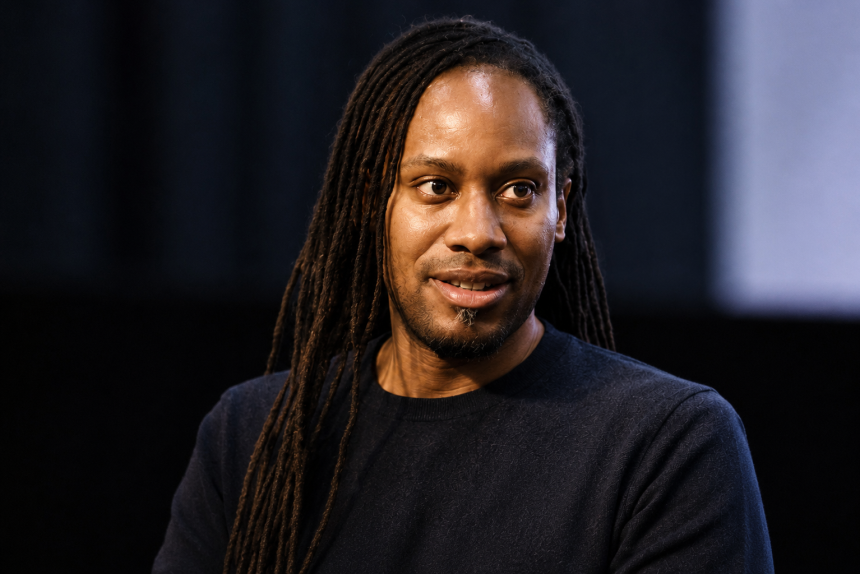
The death of Professor Jason Arday, the British sociologist who became the youngest Black person ever appointed to a professorship at the University of Cambridge, has left behind a complicated mixture of achievement, controversy, grief and unanswered questions. Arday, 41, was found unresponsive at a property in Battersea, south London, on August 13, only days after resigning from Cambridge amid allegations concerning his doctoral thesis, academic record and aspects of his personal story. Police said his death was unexpected but was not being treated as suspicious.
Arday’s life initially appeared to be an extraordinary story of human determination. Born and raised in Clapham, South London, to Ghanaian parents, he was diagnosed at the age of three with autism and global developmental delay. Cambridge said he was unable to speak until he was 11 and could not read or write until he was 18. His family had reportedly been told that he might require lifelong support, but he went on to attend college, study physical education and education, train as a teacher and eventually earn a PhD. His family heritage was Ghanaian through his parents, while his birthplace and upbringing were firmly in Britain.
His academic career was considerable. Arday worked at Liverpool John Moores University, where he earned his PhD in Education, before becoming Professor of Sociology of Education at the University of Glasgow in 2021. In March 2023, he joined Cambridge as Professor of Sociology of Education. His research focused on race and inequality in education, particularly racial and intersectional inequality in higher education, as well as mental health, cultural studies, education policy and decolonising the curriculum.
That makes the allegations surrounding his career particularly painful. The central academic controversy concerned his 2015 doctoral thesis, An exploration of peer-mentoring among student teachers to inform reflective practice within the context of action research, submitted to Liverpool John Moores University. Allegations were later made that sections of the thesis closely resembled earlier academic work, raising questions about originality and attribution.
What Is Plagiarism? Plagiarism is presenting another person’s words, ideas, research or intellectual work as one’s own without proper acknowledgement.
It can include copying sentences or paragraphs without citation, reproducing another person’s research without attribution, or presenting another person’s ideas as original. Academic writing therefore requires more than good grammar and impressive vocabulary; it requires intellectual honesty.
This distinction is important in Arday’s case because an allegation is not automatically a conviction. Arday denied intentionally plagiarising his doctoral work, although he acknowledged mistakes in the thesis. Liverpool John Moores University had previously examined concerns surrounding the thesis, while Cambridge later launched a new investigation into his appointment and academic record after receiving additional information. That investigation had not reached a final conclusion when Arday resigned.
There is, nevertheless, a powerful lesson in the controversy. When a scholar is accused of plagiarism, one of the strongest responses is evidence. A researcher should be able to identify the original sources, explain the methodology, distinguish borrowed material from original work and demonstrate that citations have been properly made.
In Arday’s case, the doctoral thesis itself was available for examination. The discussion should therefore return to the document, the sources and the evidence rather than become a contest of personalities, assumptions and social-media narratives.
But there is another side that society must not ignore. Public scrutiny must not become a substitute for due process. Academic allegations should be investigated by competent institutions, evidence should be tested and conclusions should be reached before an individual is permanently labelled guilty.
The fact that Arday was a Black academic should neither shield him from legitimate scrutiny nor make him a convenient target for people seeking to discredit Black scholars generally. Both positions would be unfair.
The description of Arday as Cambridge’s youngest Black professor also deserves reflection. His racial identity was relevant to the historical significance of his appointment because Cambridge itself highlighted that milestone. But once questions about his academic record emerged, repeatedly reducing the story to “a Black professor” risked turning an individual academic controversy into a racial spectacle.
Good journalism should identify him accurately as a British sociologist of Ghanaian parentage and then examine his career, achievements and the allegations against him on their evidence and merits.
The controversy also exposed the danger of building an entire public identity around an extraordinary personal narrative. Arday’s story of overcoming significant childhood difficulties was inspirational, but the more remarkable a public biography becomes, the more important independent verification becomes.
Claims about academic qualifications, professional appointments, charitable achievements, sporting accomplishments or other significant personal experiences should be capable of documentation. The lesson for every professional is simple: do not decorate your genuine achievements with inventions.
For students, lecturers, journalists, authors and content creators, the message is even clearer: create original work.
Do not copy another person’s article word-for-word and present it as your own. Do not lift research, statistics, photographs, quotations or arguments without proper attribution. Read widely, understand the subject, conduct your own analysis and acknowledge the people whose ideas helped shape your work.
Originality does not mean that nobody has ever discussed the subject before. It means that your contribution is honestly distinguished from the work of others.
There is an old warning that a lie rarely travels alone: once one falsehood is introduced, additional explanations may be required to protect it. Whether that principle ultimately applies to every allegation made against Arday is a matter that cannot now be conclusively determined through the unfinished Cambridge investigation.
What is clear is that an accomplished academic career ended under extraordinary pressure, followed by a sudden death that has generated questions about institutional responsibility, academic standards, media conduct and the treatment of public figures under intense scrutiny. Arday’s family has said he faced sustained abuse and misinformation, while Cambridge has expressed condolences and defended the support it provided to him.
That broader question should not be ignored. Legitimate investigative journalism has an important role in holding powerful institutions and individuals accountable. But investigation and humiliation are not the same thing. Asking difficult questions is legitimate; destroying a person’s dignity without establishing the facts is another matter entirely.
Jason Arday’s death should therefore not become an excuse either to declare him guilty without a completed investigation or to dismiss every question raised about his academic record simply because he has died. Both extremes would be intellectually dishonest.
The humane position is to mourn a 41-year-old man, respect his family, acknowledge his genuine academic achievements, preserve the presumption against unproven allegations and insist that questions of academic integrity be answered through evidence rather than emotion.
His story ultimately leaves society with a sober lesson: build your career slowly, honestly and on work you can defend. Reputation built on truth can survive scrutiny, while a reputation dependent on an embellished story can eventually become a cage of its own. The higher a person climbs, the more important it becomes that every step taken on that journey can withstand examination.
For every aspiring professional, the advice is straightforward: live an honest life, climb the ladder by noble means, produce original work, acknowledge your sources and never build your future on a story you cannot defend. A modest achievement honestly earned is worth far more than an extraordinary accomplishment that must constantly be protected by another explanation.
Whatever history ultimately concludes about the allegations surrounding Jason Arday, his death should remind the living that reputation is fragile, truth matters and public scrutiny carries consequences. Let the evidence speak, let due process prevail and let compassion remain present even when difficult questions must be asked.
Rest in peace, Professor Jason Arday. May the final judgment of history be guided by evidence, fairness and humanity.