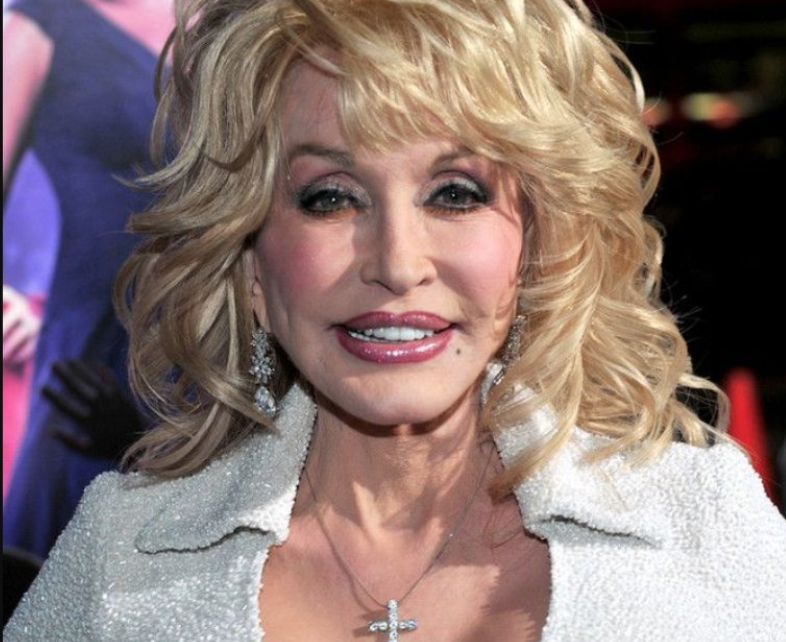
American country music legend Dolly Parton, whose unmistakable voice, remarkable songwriting and larger-than-life personality made her one of the most loved entertainers of her generation, has died at the age of 80.
Parton died on Tuesday, August 25, 2026, in Nashville, Tennessee, bringing to an end a career that spanned more than six decades and reached far beyond country music into film, business and philanthropy.
Her death was announced by her family, with her nephew, Bryan Seaver, delivering the news in a video shared through Parton’s social media platforms.
Seaver, speaking on behalf of the Parton and Owens families, described the announcement as a moment of profound sadness and pride as he paid tribute to the woman known to millions simply as Dolly.
“Dolly lived in the light and is in the arms of Jesus, surely,” he said.
No official cause of death had been disclosed at the time of filing this report. Parton had, however, experienced health challenges in recent months, which forced her to cancel some appearances and postpone a planned Las Vegas residency.
Her death closes an extraordinary chapter in American entertainment — one that began in poverty in the mountains of Tennessee and eventually produced one of the most recognisable figures in global popular culture.
From rural Tennessee to global stardom
Born Dolly Rebecca Parton on January 19, 1946, in Tennessee, Parton was the fourth of 12 children raised in a poor family in the Smoky Mountains.
Music was part of her life almost from the beginning. She sang in church as a child, performed on local radio and television programmes and began writing songs while still young.
After graduating from high school in 1964, she left for Nashville to pursue music professionally. It was a gamble that would ultimately transform not only her life but country music itself.
Parton’s breakthrough came through songwriting and later her partnership with country music star Porter Wagoner. Before long, she had established herself as a major solo performer with a distinctive voice and an unusual ability to turn deeply personal experiences into songs that resonated far beyond her Appalachian roots.
Over the decades, she wrote thousands of songs and recorded some of country music’s most enduring classics, including Jolene, Coat of Many Colors, 9 to 5 and I Will Always Love You.
The latter became a country hit for Parton before Whitney Houston’s rendition turned the composition into one of the biggest-selling singles in popular music history.
Parton recorded 25 No. 1 country hits and sold more than 100 million records worldwide. She won 11 Grammy Awards, received the Recording Academy’s Lifetime Achievement Award and was inducted into both the Country Music Hall of Fame and the Rock & Roll Hall of Fame.
Yet numbers tell only part of the story.
Parton possessed a rare ability to remain unmistakably herself while appealing to audiences who might otherwise have had little in common. Her exaggerated blonde wigs, rhinestone costumes and quick humour became part of her public identity, but behind the glamour was a songwriter whose work frequently dealt with poverty, heartbreak, faith, family and the struggles of working people.
Beyond country music
Parton’s success was never confined to the recording studio.
She became a Hollywood star, making her major film debut in the 1980 comedy 9 to 5, alongside Jane Fonda and Lily Tomlin. The film became a commercial success, while its Parton-written title song became another defining hit.
She later appeared in films including The Best Little Whorehouse in Texas and Steel Magnolias, demonstrating an ease on screen that broadened her appeal far beyond country music audiences.
Her business interests were equally significant.
Parton’s connection to her native East Tennessee eventually became the foundation for Dollywood, the theme park in Pigeon Forge that grew into one of Tennessee’s leading tourist attractions and a major source of employment and economic activity in the region.
Despite enormous international success, Parton never attempted to distance herself from where she came from. Instead, she repeatedly invested in the communities and people who shaped her early life.
A legacy built on giving
Away from the stage, Parton’s philanthropy became almost as important to her public legacy as her music.
Among her most celebrated initiatives was the Imagination Library, a childhood literacy programme launched in 1995 to provide free books to young children.
What began as a programme serving children in her home county in Tennessee expanded internationally, distributing hundreds of millions of books to children in several countries.
Parton also donated $1 million to Vanderbilt University Medical Center to support research connected with the development of Moderna’s COVID-19 vaccine, an intervention that drew international attention to a charitable record she had built quietly over many years.
Her generosity extended to disaster relief, education, healthcare and support for families affected by wildfires in Tennessee.
For Parton, wealth appeared to matter most when it could be put to use.
That attitude helped explain why the carefully constructed image — the wigs, rhinestones and self-deprecating jokes — never overshadowed the affection many people felt for the person behind it.
A rare figure who crossed cultural divides
Parton’s death has prompted an outpouring of tributes from across the entertainment world, with fellow musicians, actors and admirers remembering not only the performer but also the warmth and generosity associated with her.
Her 9 to 5 co-star Lily Tomlin was among those paying tribute following news of her death, as musicians, actors and fans reflected on the influence Parton had on their lives and careers.
That response reflects something increasingly rare in public life: Dolly Parton belonged to no single generation, political camp or cultural tribe.
She could perform before deeply conservative country audiences and still command affection among younger and more progressive listeners. She spoke openly about her Christian faith without turning it into a weapon against others. She could laugh at herself without diminishing her accomplishments.
Parton seemed to understand that kindness did not require agreement and that success did not require abandoning one’s roots.
It was perhaps this quality, as much as the music, that turned her from a successful country singer into an American cultural institution.
The songs remain
Parton’s death comes less than two years after the death of her husband, Carl Thomas Dean, in March 2025.
The couple met shortly after Parton arrived in Nashville and married in 1966. Dean deliberately remained outside the spotlight throughout most of his wife’s extraordinary career, and their marriage lasted nearly six decades.
Parton continued working following his death, even as she spoke publicly about the difficulty of adjusting to life without the man who had been beside her for most of her adult life.
Now, an extraordinary journey that began with a girl from a poor Tennessee family dreaming of writing and singing songs has come to an end.
But Dolly Parton’s influence is unlikely to disappear with her.
It lives in the artists who followed the path she helped open for women in country music; in the millions of children who received their first books through her literacy programme; in the Tennessee communities that benefited from her investments; and, above all, in the songs.
From Jolene to 9 to 5, Coat of Many Colors and I Will Always Love You, those songs crossed borders, generations and genres.
Dolly Parton spent more than six decades building a career on talent, humour, resilience, faith and an unusual capacity to make people feel welcome.