By Samuel Abasiekong-Abasiekong
Across Africa, a new ideological and political battle is unfolding — one that many analysts, activists, and citizens increasingly describe as a struggle between renewed Western imperialism and African sovereignty. From the military-led governments of the Sahel to pro-Western administrations in parts of East and Central Africa, the continent appears sharply divided over how to engage global powers such as France, the United States, and Britain.
At the center of this debate is the growing resistance by countries like Burkina Faso, Mali, and Niger against French and broader Western influence, contrasted with the deepening strategic relationships maintained by leaders such as William Ruto, Paul Biya, and Bola Ahmed Tinubu with Emmanuel Macron and Western powers.
THE RETURN OF NEO-IMPERIALISM IN AFRICA
Although formal colonialism ended decades ago, critics argue that the West never truly relinquished control over Africa. Instead, they say colonialism evolved into neo-imperialism, a system in which economic dependence, military agreements, debt structures, intelligence cooperation, multinational corporations, and political influence replaced direct territorial occupation.
France, in particular, has remained deeply entrenched in many of its former African colonies through what scholars often describe as “Françafrique”, an informal but powerful network of political, military, and economic ties that has enabled Paris to retain influence across francophone Africa.
For decades, French troops operated in the Sahel under anti-terrorism missions such as Operation Barkhane, while French companies maintained dominant positions in uranium, telecommunications, banking, and infrastructure sectors. The CFA franc monetary system also remained controversial, with critics arguing that it perpetuated economic dependence on Paris.
Similarly, the United States expanded military operations across Africa through AFRICOM, drone bases, intelligence cooperation, and security partnerships, often justified by the global war against terrorism.
To many Africans, however, these relationships increasingly appear less like partnerships and more like modern instruments of control.
THE SAHEL REVOLT AGAINST WESTERN DOMINANCE
The clearest resistance to this perceived imperial order has emerged in the Sahel region.
In recent years, military governments in Mali, Burkina Faso, and Niger have expelled French troops, downgraded relations with Paris, and openly accused Western governments of exploiting Africa under the guise of security cooperation.
BURKINA FASO AND IBRAHIM TRAORÉ’S PAN-AFRICAN SYMBOLISM
Perhaps no figure embodies this new anti-imperialist sentiment more than Ibrahim Traoré.
Since seizing power in 2022, Traoré has become a symbolic figure among African youth who see him as challenging decades of Western dominance. His speeches frequently invoke African dignity, self-reliance, and resistance against foreign exploitation.
Under his leadership, Burkina Faso expelled French military forces and sought alternative alliances outside traditional Western blocs. Supporters compare his rhetoric to revolutionary African leaders such as Thomas Sankara, who famously denounced imperialism and advocated African economic independence in the 1980s.
Traoré’s popularity across social media platforms reflects a growing frustration among young Africans who believe their countries remain politically independent but economically subordinate.
NIGER’S BREAK WITH FRANCE
The political rupture in Niger following the 2023 coup further exposed anti-French sentiment in West Africa.
Niger had long been one of France’s closest security allies in the region, despite being one of the world’s poorest countries while simultaneously supplying uranium critical to French nuclear energy production.
Following the coup, the military authorities ordered French troops to leave and accused Paris of interference in Nigerien affairs. Massive demonstrations in Niamey featured anti-French slogans and calls for full sovereignty.
To supporters of the junta, the expulsion of French influence represented a reclaiming of national dignity. Critics, however, warned that military governments risk authoritarianism and instability while merely shifting dependence from the West toward Russia or other external powers.
MALI AND THE COLLAPSE OF WESTERN SECURITY STRATEGY
Mali also became a major symbol of resistance after its military rulers cut ties with France and deepened cooperation with Russia.
For years, Mali hosted thousands of French troops battling Islamist insurgencies. Yet many Malians grew frustrated as insecurity persisted despite prolonged foreign military presence.
The junta capitalized on this anger, arguing that Western intervention had failed and that Mali needed a new direction free from external control.
The collapse of France’s once-dominant influence in Mali signaled a broader regional transformation: for the first time in decades, several African states openly challenged Paris without immediate political collapse.
KENYA AND THE NEW STRATEGIC ALLIANCE WITH THE WEST
While the Sahel states confront Western influence, Kenya under William Ruto has moved in the opposite direction.
Ruto’s administration has strengthened ties with the United States, France, and Britain through security, trade, and technology agreements.
One controversial example was Kenya’s agreement to lead a multinational security mission in Haiti, widely viewed as backed by Washington. Critics within Kenya argued that the mission primarily served Western geopolitical interests rather than Kenyan national priorities.
Ruto’s government has also faced criticism over reported agreements involving data sharing, military cooperation, and strategic partnerships with foreign governments.
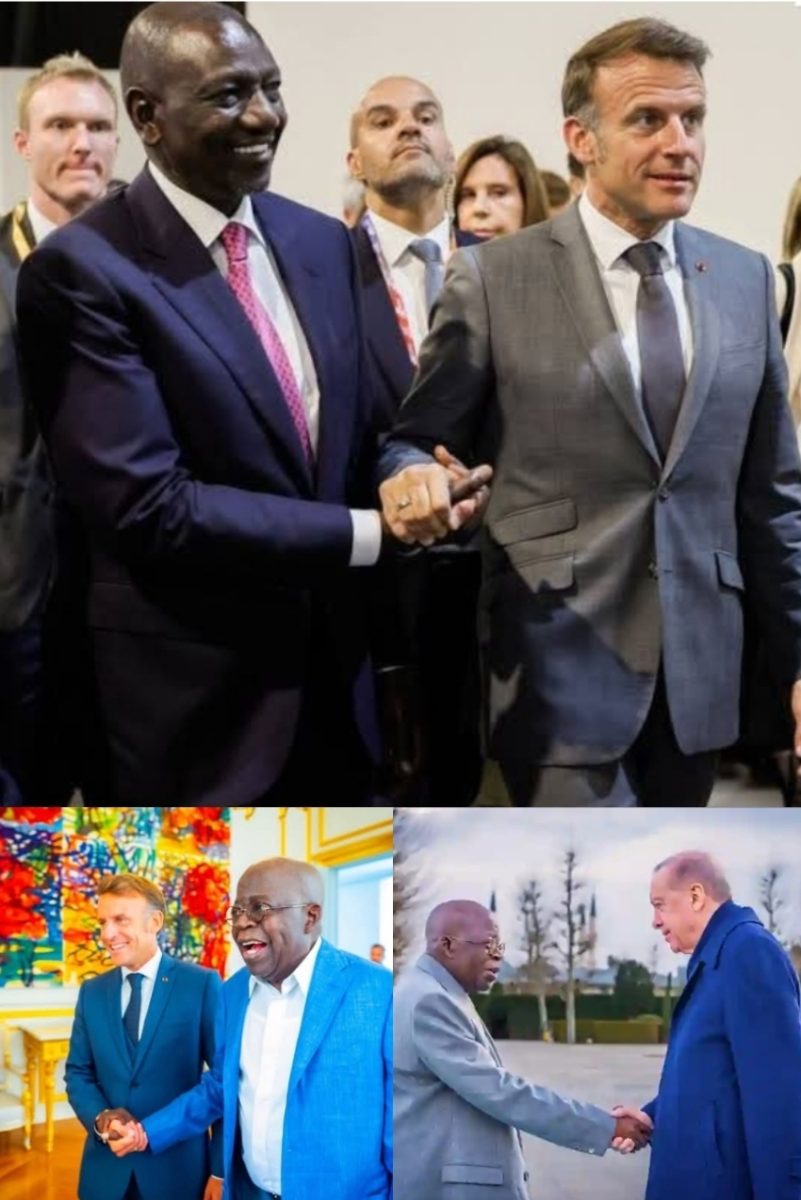
The visit of Emmanuel Macron to Nairobi further highlighted this growing relationship. Several agreements reportedly covered infrastructure, rail transport, digital technology, fisheries, ports, and energy cooperation.
Supporters of the Kenyan government argue these partnerships are necessary for development, investment, and modernization. Critics, however, fear Kenya may become a gateway for renewed Western influence in East Africa.
They point to Africa’s historical experience, where foreign investments often benefited multinational corporations and local elites more than ordinary citizens.
CAMEROON AND FRANCE’S LONG-STANDING INFLUENCE
In Cameroon, the relationship with France remains deeply rooted.
President Paul Biya, one of Africa’s longest-serving leaders, has maintained close ties with Paris throughout his decades in power.
France remains a major economic and diplomatic partner to Cameroon, and analysts argue that this relationship reflects the continued survival of post-colonial influence structures in francophone Africa.
Opposition voices in Cameroon frequently accuse France of prioritizing regime stability and economic interests over democratic reforms and human rights concerns.
NIGERIA’S STRATEGIC BALANCING UNDER TINUBU
Under President Bola Ahmed Tinubu, Nigeria has maintained strong diplomatic engagement with Western powers, particularly France and the United Kingdom, while also seeking broader international partnerships.
Tinubu’s government supported ECOWAS pressure on Niger following the coup, including the threat of military intervention, a stance that angered many Africans who viewed it as aligning with Western interests against a fellow African state.
Critics accused Nigeria of acting as a regional enforcer for foreign powers, especially France. Supporters, however, argued that Nigeria was defending constitutional order and regional stability.
Nigeria’s relationship with France has also grown through economic, energy, and security cooperation with the administration of Emmanuel Macron.
Critics further point to Nigeria’s increasing dependence on foreign loans and debt financing as another dimension of modern economic dependency. Over the years, Nigeria has accumulated massive internal and external debts running into billions of dollars through borrowings from institutions and countries including the World Bank, IMF-linked facilities, China, France, and international capital markets.
Opponents of the borrowing policy argue that continuous debt accumulation weakens national sovereignty by exposing African economies to external policy influence, austerity conditions, currency pressures, and foreign financial control. They contend that many African governments increasingly rely on loans not only for infrastructure but also for recurrent expenditure, thereby deepening dependency on external powers.
Supporters of the Tinubu administration, however, insist that borrowing remains necessary to stabilize the economy, finance infrastructure, support reforms, and address fiscal challenges inherited from previous administrations.
Another major controversy has emerged around Nigeria’s tax reform agenda. Critics cite the recent cooperation agreements between Nigeria and France, including understandings aimed at tax administration and revenue recovery support, as evidence of deepening Western influence over Nigeria’s fiscal architecture.
To critics, external involvement in tax reforms raises fears that strategic sectors of Nigeria’s economy may become increasingly exposed to foreign advisory control and multinational interests. Supporters, however, argue that international cooperation in taxation is necessary to improve revenue generation, curb illicit financial flows, and modernize Nigeria’s tax system.
Beyond France and the West, Nigeria has also expanded partnerships with countries such as Turkey in defense, construction, energy, and trade. While the Nigerian government presents these ties as part of a diversified foreign policy, critics argue that replacing one dominant foreign partner with another does not necessarily amount to true economic independence.
Some Pan-African commentators describe the growing Turkish footprint in Africa as another evolving form of neo-colonial influence, particularly through military hardware sales, strategic infrastructure projects, and expanding political leverage across the continent.
Security cooperation with the United States has also generated debate within Nigeria. Reports and discussions surrounding increased American military presence, intelligence coordination, and possible strategic military facilities in Nigeria have fueled concerns among sections of the population who fear the gradual expansion of foreign military influence on Nigerian soil.
Critics warn that foreign military bases and expanded external security operations often come with geopolitical consequences that may compromise national sovereignty. Supporters, however, argue that such partnerships are necessary to combat terrorism, insurgency, piracy, and transnational organized crime.
Yet within Nigeria itself, there remains strong public skepticism toward Western influence, particularly among Pan-African activists and younger citizens inspired by developments in the Sahel.
THE BIGGER QUESTION: PARTNERSHIP OR DEPENDENCY?
The central debate is not whether Africa should engage the West as global cooperation remains essential in an interconnected world. Rather, the question is whether these relationships are genuinely equal partnerships or modern forms of dependency.
Supporters of Western partnerships argue that Africa needs foreign investment, security cooperation, infrastructure financing, technology transfer, and international trade to grow its economies.
Critics counter that many agreements are negotiated behind closed doors, lack transparency, increase debt burdens, weaken local industries, and allow foreign powers to shape African policies.
They also argue that Western governments frequently support African leaders who protect foreign strategic interests, even when those governments face domestic criticism over governance and accountability.
THE RISE OF AFRICAN POLITICAL CONSCIOUSNESS
What is undeniably changing, however, is African political consciousness.
Across social media, universities, civil society groups, and youth movements, conversations about sovereignty, resource control, and foreign influence have intensified.
The popularity of leaders like Ibrahim Traoré reflects not merely support for military rule, but widespread frustration with decades of poverty, insecurity, corruption, and perceived external domination despite Africa’s enormous natural wealth.
At the same time, critics warn against romanticizing military juntas, noting that anti-Western rhetoric alone does not automatically produce democracy, economic development, or human rights protections.
AFRICA AT CROSSROADS
Africa now stands at a historic crossroads.
One path embraces continued integration with Western powers through economic cooperation, military alliances, and globalization. The other seeks a radical restructuring of Africa’s global relationships in pursuit of greater sovereignty and self-determination.
The tension between these visions is likely to define African politics for years to come.
Whether leaders align with Paris, Washington, Beijing, Moscow, Ankara, or pursue a truly independent path, African citizens are increasingly demanding accountability, transparency, and partnerships that genuinely serve their national interests rather than perpetuating another era of foreign domination.
©️
Written by Samuel Abasiekong-Abasiekong, Int’l Journalist Reporting in French & English Languages, Senior News Editor @ 9newsng.com, Author of many books, Researcher, French Language Lecturer
E-mail: [email protected]