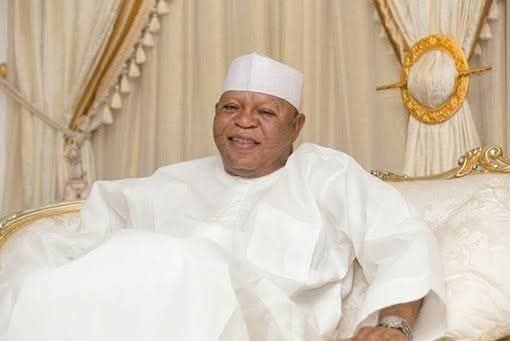
From banker to politician, Prince Abubakar Audu’s legacy continues to shape Kogi State’s political and developmental history
Early Life and Background
Prince Abubakar Audu was born on 24 October 1947 in Ogbonicha-Alloma, Ofu Local Government Area of Kogi State, Nigeria. He hailed from the royal family of Ogbonicha, which earned him the title “Prince.” His upbringing was shaped by strong traditional values, discipline, and a sense of service to his people—traits that would later define his political and professional journey.
Audu’s early education began in his hometown before proceeding to higher institutions where his brilliance quickly stood out. He pursued studies in banking and finance, eventually earning professional certifications that set him apart in Nigeria’s emerging financial sector. His early career began at the First Bank of Nigeria, where he steadily rose through the ranks due to his diligence and expertise.
Education and Career Before Politics
Prince Audu’s educational background reflected his dedication to knowledge and leadership. After completing his basic and secondary education in Kogi State, he furthered his studies in finance and banking both in Nigeria and abroad.
He worked for over two decades at the First Bank of Nigeria, serving in several key managerial positions. His excellence in the banking sector eventually led to his appointment as the Executive Director of FBN—a major milestone that established him as one of Nigeria’s prominent financial minds before transitioning into public service.
Political Rise and Tenure as Governor
Audu’s entry into politics came during the early 1990s, a period of democratic transition in Nigeria. In January 1992, he became the first civilian governor of Kogi State under the platform of the National Republican Convention (NRC) during the Third Republic.
During his first tenure (1992–1993), Audu embarked on ambitious development projects aimed at transforming Kogi State, which had just been created in 1991. His administration prioritised infrastructure, education, healthcare, and industrial growth, with the goal of making Kogi one of Nigeria’s most progressive states. However, his tenure was cut short by the military coup of November 1993 that brought General Sani Abacha to power.
In 1999, with Nigeria’s return to democracy, Audu once again contested and won the governorship election under the All People’s Party (APP), serving until May 2003. His second tenure saw the establishment of key institutions and projects such as the Kogi State University (now Prince Abubakar Audu University), Obajana Cement Factory, and numerous roads, hospitals, and schools.
Later Political Career and the 2015 Election
Prince Audu remained a central figure in Kogi politics long after leaving office. In 2015, he ran for governor once again, this time under the All Progressives Congress (APC). His campaign resonated with many Kogi citizens who viewed him as a proven leader capable of restoring the state’s fortunes.
Tragically, on 22 November 2015, shortly after the Independent National Electoral Commission (INEC) declared the election inconclusive, Audu passed away. His sudden death shocked the nation and marked one of the most dramatic moments in Nigeria’s democratic history.
Despite his passing, the political structure he built in Kogi State continued to influence governance and political alignments for years after.
Family and Legacy
Prince Abubakar Audu was married and had children, among whom is Eke Audu, who continues to uphold the family’s legacy of public service. In 2024, she was appointed as the Executive Director, Commercial Services of the Nigerian Electricity Management Services Agency (NEMSA) by President Bola Ahmed Tinubu—a testament to the enduring recognition of the Audu family’s contribution to national development.
Prince Audu’s leadership style was often described as visionary, bold, and deeply connected to the grassroots. Beyond his achievements in politics, he was a cultural icon and philanthropist who supported education, youth empowerment, and community development.
Death and Remembrance
Prince Abubakar Audu’s death on 22 November 2015, at the age of 68, marked the end of an era in Kogi politics. His passing came just as he was on the brink of reclaiming the governorship, underscoring the fragility of life and the unpredictability of history.
Today, several landmarks and institutions in Kogi State bear his name, including the Prince Abubakar Audu University (PAAU) in Anyigba. His legacy lives on through the projects he initiated, the people he inspired, and the political values he championed.
References: Kogi State Government Archives – Profiles of Past Governors