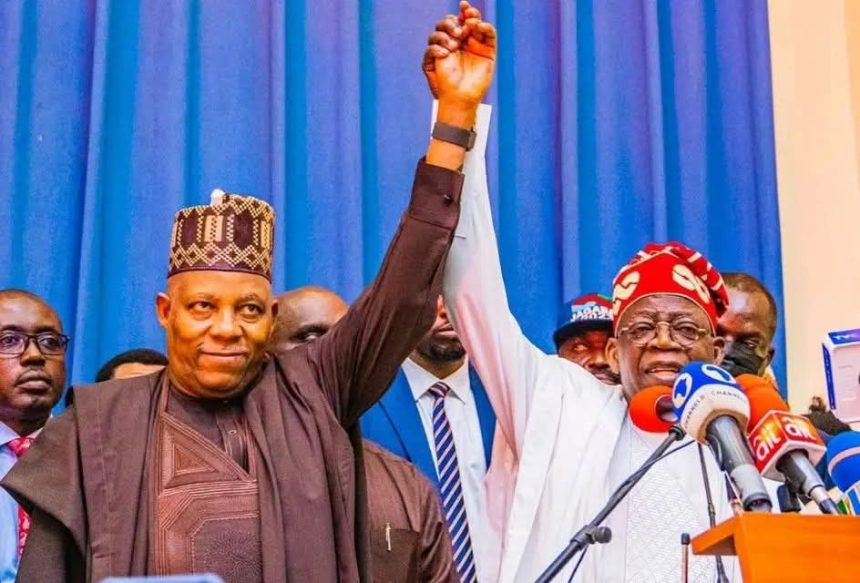
The All Progressives Congress (APC) has officially unveiled Vice President Kashim Shettima as the running mate to President Bola Ahmed Tinubu for the 2027 presidential election, confirming that the party will again contest on a Muslim-Muslim ticket.
The announcement was made on Friday during the party’s official unveiling ceremony in Abuja, putting an end to weeks of speculation that Tinubu could replace Shettima with a northern Christian ahead of the election.
The decision comes despite continued criticism from many Christian groups and political stakeholders in Southern Nigeria, who have repeatedly argued that retaining a Muslim-Muslim ticket fails to reflect Nigeria’s religious diversity and could further deepen feelings of exclusion among Christian communities.
Before the announcement, former Speaker Yakubu Dogara and Secretary to the Government of the Federation, George Akume, were widely mentioned as possible replacements for Shettima in what many believed would be an effort to balance the ticket religiously.
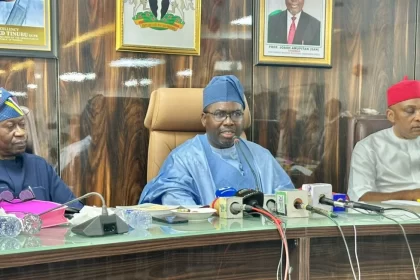
Speaking at the unveiling ceremony, APC National Chairman, Professor Nentawe Yilwatda, addressed party leaders and supporters, while the party’s National Publicity Secretary, Felix Morka, later confirmed that Shettima would remain the vice-presidential candidate for the 2027 election.
The confirmation came just hours before the Independent National Electoral Commission (INEC) closed its portal for the submission of presidential and National Assembly candidates, with Saturday, July 11, 2026, set as the deadline for political parties to upload their nominated candidates.
Several APC governors attended the event, including Hope Uzodimma of Imo State, Uba Sani of Kaduna State, Babagana Zulum of Borno State, as well as the governors of Jigawa and Kebbi states.
Kano State Governor Abba Yusuf was also present at the unveiling alongside other party leaders and stakeholders.
The retention of the Muslim-Muslim ticket is expected to remain a major issue in the build-up to the 2027 general election, particularly in Southern Nigeria, where many religious and socio-political groups have continued to express reservations over the APC’s decision to field two Muslim candidates for a second consecutive presidential contest.