By Obinna Ejianya (9News Nigeria – Melbourne, Australia)
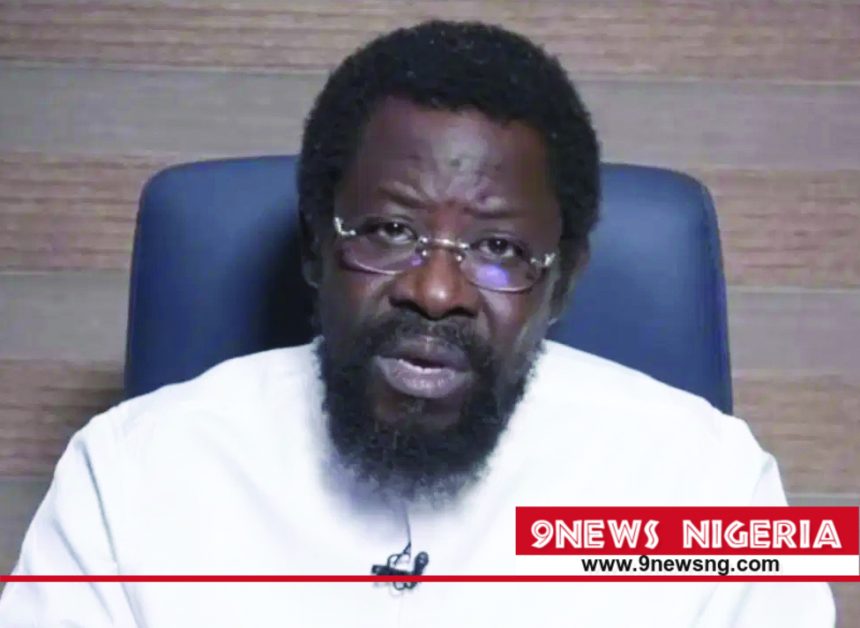
Human rights lawyer and political activist Dele Farotimi has stirred fresh controversy over the future of Nigeria’s democracy, declaring that the country may not witness a genuine electoral process in 2027.
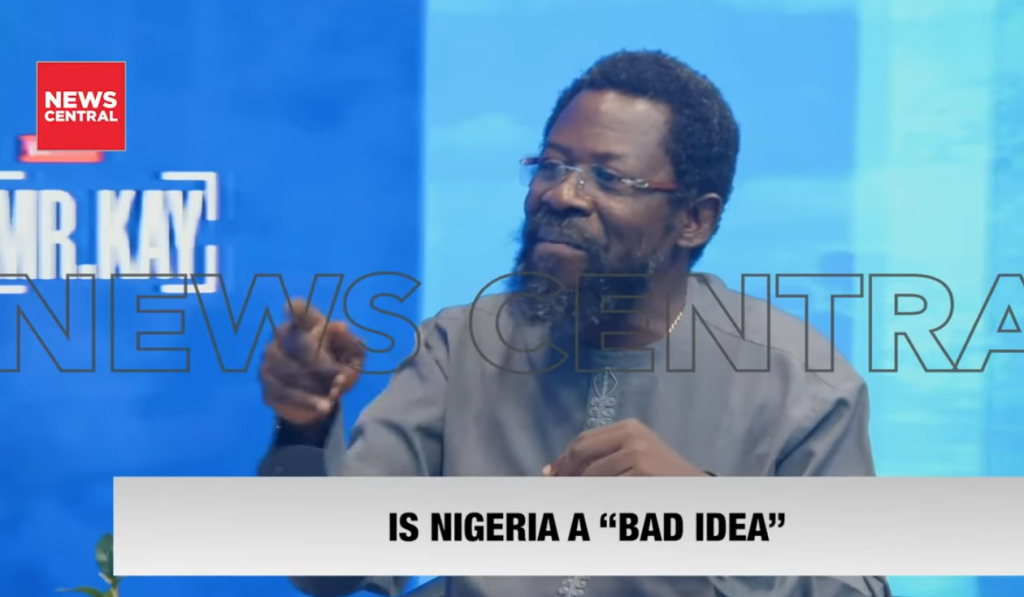
Farotimi made the assertion during an appearance on News Central’s 60 Minutes with Mr Kay, anchored by Kayode Akintemi, a programme monitored by 9News Nigeria. In his remarks, he expressed deep scepticism about the integrity of Nigeria’s political system, stating bluntly that “there will be no election in 2027.”
Speaking during the interview, Farotimi described the very foundation of Nigeria as fundamentally flawed, arguing that the country’s governance model has consistently failed to serve the interests of ordinary citizens.
Dele Farotimi opined that Nigeria is built on what is called a bad idea. “Systems are built with purposes in mind, and purposes are almost always found in ideas. The idea of Nigeria is a very, very bad idea, he said” According to him, what lies ahead in 2027 may not reflect a democratic contest but rather a predetermined outcome shaped by entrenched political interests.
While responding to the anchor, he described Nigeria as being in a state of ‘gloom and doom’, adding that all Nigeria has to do is to yoke the country to the rule of law where the court becomes effective.
“We can not continue our current trajectory and then expect that something positive will come out of what is manifestly evil,” he said.
He further questioned the independence of key democratic institutions, particularly the Independent National Electoral Commission (INEC) and the judiciary. Farotimi suggested that both institutions have, over time, lost public confidence due to controversial rulings, electoral irregularities, and perceived political influence.
His comments come against the backdrop of lingering disputes from Nigeria’s recent elections, where opposition parties and civil society groups raised concerns over transparency, result transmission, and judicial decisions that followed. The credibility of the electoral process has remained a recurring issue in national discourse, with many Nigerians expressing doubts about whether reforms have gone far enough to guarantee free and fair elections.
Farotimi also touched on broader socio-political challenges, including rising poverty levels, deepening ethnic divisions, and what he described as the collapse of the rule of law. He argued that these factors have alienated a significant portion of the population from the democratic process, creating a sense of exclusion and distrust.
Over the years, Farotimi has built a reputation as a vocal critic of governance in Nigeria. He has consistently advocated for systemic reforms, accountability, and a re-evaluation of the country’s political structure. His interventions—often delivered through public commentary, legal activism, and media appearances—have positioned him as a prominent voice within Nigeria’s pro-democracy and reform movement.
His latest remarks have since triggered widespread reactions across political and public spheres, with some interpreting his comments as a warning about the current trajectory of Nigeria’s democracy, while others view them as an extreme but thought-provoking critique of the system.
As debates intensify, the focus is increasingly shifting toward whether Nigeria’s institutions can rebuild public trust ahead of the 2027 general elections, or whether concerns such as those raised by Farotimi reflect deeper structural issues that remain unresolved.
9News Nigeria reports that the conversation around electoral integrity, institutional independence, and governance reforms is expected to dominate political discourse in the coming months as the nation gradually moves toward another election cycle.