By Princely Onyenwe | Analysis
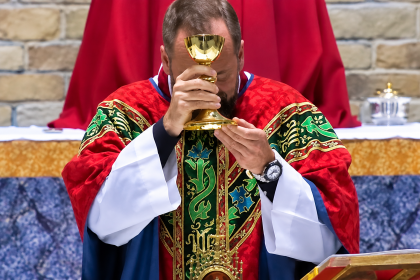
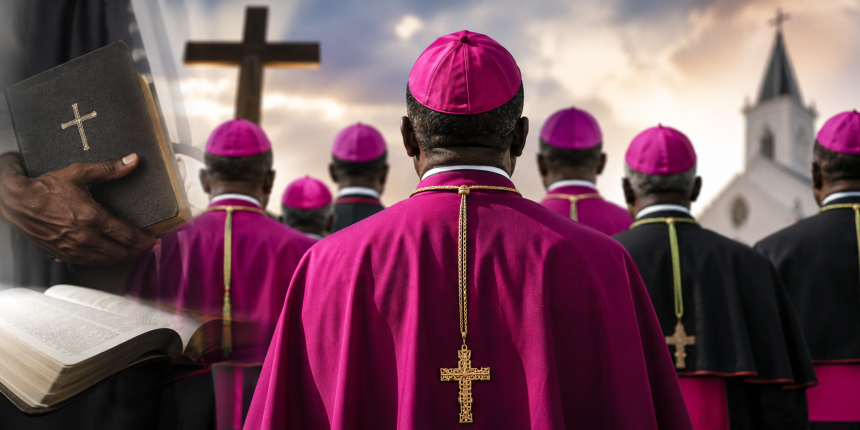
Growing concern is mounting among Christians and religious observers over the increasing use and conferment of the title “Bishop” across Nigeria, with calls for greater clarity, theological preparation and accountability in the way senior ministerial titles are created and recognised.
The concern centres on the emergence of bishops from a growing number of independent ministries and church organisations, particularly where critics say there appears to be little publicly verifiable information about the ecclesiastical structure, ministerial formation, pastoral experience or denominational process behind the elevation.
The debate, however, is not about questioning the legitimacy of independent churches or denying ministers the freedom to organise their ministries. Rather, it is about whether titles with significant historical and ecclesiastical meaning should be accompanied by minimum standards that distinguish recognised church office from honorary, administrative or self-assigned designations.
The issue has become more relevant following recent comments by the President of the Pentecostal Fellowship of Nigeria, Bishop Francis Wale Oke, who said titles such as “Senior Pastor” and “Archbishop” are administrative tools created by some church organisations to establish leadership structures and are not doctrinal positions specifically prescribed in the Bible.
That position adds an important dimension to the debate because different Christian traditions do not necessarily attach the same institutional meaning to the title “Bishop.” In some denominations, episcopal office is governed by established ecclesiastical structures, while in some independent Pentecostal ministries, titles may primarily describe leadership hierarchy within the organisation.
Critics, however, argue that this diversity makes transparency even more necessary, particularly when titles are presented to the public as though they carry universal recognition across Nigerian Christianity.
The Christian Association of Nigeria, CAN, remains the country’s umbrella Christian body, but its constitutional framework does not give it unilateral authority over the internal affairs of every member church. Article 7 of the CAN constitution provides that each member church remains autonomous in its internal affairs, although it may receive advice from the Association in cases of disagreement.
Consequently, CAN cannot simply dictate who may use the title “Bishop” across all Christian denominations. Religious observers, however, say that limitation should not prevent CAN, the Pentecostal Fellowship of Nigeria and other Christian blocs from developing common ethical guidelines or a framework for voluntary recognition and accountability.
The question is not necessarily whether CAN should control every ordination. It is whether the country’s major Christian bodies should help establish a clearer distinction between denominationally recognised episcopal office, organisational leadership titles and honorary religious designations.
The concern is not entirely new. Academic research has repeatedly identified church proliferation, competition, commercialisation and leadership ambitions among issues requiring greater attention within Nigerian Christianity. Studies on the proliferation of churches in Nigeria have identified economic, social and institutional factors behind the rapid emergence of churches and have discussed regulation among possible responses.
The issue has also attracted attention within Christian circles. A 2025 publication from the Catholic Diocese of Uromi argued that Nigeria lacks a single recognised body capable of regulating pastoral or episcopal titles across all Christian traditions and called for stronger institutional mechanisms, including minimum qualifications and vetting.
The debate therefore goes beyond the number of bishops in the country. At stake is the meaning, credibility and public understanding of the office.
In historic episcopal traditions, becoming a bishop ordinarily involves a defined system of theological formation, pastoral experience, institutional oversight and formal consecration. That process differs considerably from one denomination to another, meaning that a person recognised as a bishop within one church organisation may not necessarily be recognised as such by another.
Critics are particularly concerned where ministers appear to move rapidly through titles such as Evangelist, Pastor, Apostle or Reverend before assuming the title of Bishop without a publicly identifiable progression of theological training, pastoral responsibility and ecclesiastical accountability.
There is also a need to separate academic achievement from ecclesiastical authority. Possessing a doctorate, whether earned through academic research or awarded honorarily, does not in itself constitute episcopal qualification. Similarly, founding a church or leading a congregation does not automatically confer universal ecclesiastical recognition.
Religious leaders and scholars are therefore being urged to draw a clearer line between academic credentials, ministerial calling, organisational leadership and ecclesiastical office.
The concern is particularly significant in a country where the multiplication of churches and ministries has been extensively studied. Researchers have noted that church proliferation can produce positive social contributions, including schools, employment and welfare initiatives, but have also raised questions about competition, commercialisation and the quality of religious leadership.
The argument, therefore, is not that Nigeria has too many churches or that independent ministries should be suppressed. The central question is whether the rapid multiplication of ministries should automatically result in the unrestricted multiplication of titles whose meanings have historically depended on particular systems of training, governance and accountability.
Church Elders say CAN and the various Christian blocs could begin by encouraging voluntary standards covering theological education, years of pastoral service, character assessment, denominational sponsorship, church governance and continuing ministerial development.
Such standards would not determine who is called by God. Instead, they could help the public understand the basis on which a particular Christian organisation confers and recognises senior ministerial titles.
The growing concern is ultimately about credibility. If the title “Bishop” becomes so widely and casually adopted that the public can no longer distinguish between a formally recognised episcopal office and an organisational designation, critics fear that the historical and spiritual weight associated with the title could gradually be diminished.
For Nigerian Christianity, the challenge before CAN, PFN and the various denominational bodies is therefore not necessarily to police every church or ordination, but to encourage greater transparency, accountability and respect for ecclesiastical office while preserving the constitutional autonomy of individual churches.
The question increasingly being raised is no longer simply “Who is called a bishop?” but “What process, training, responsibility and authority stand behind the title?” That is a conversation Nigeria’s Christian leadership may need to confront openly as the debate over ministerial titles continues to grow.
For inquiries on this analysis call or send comments on +23408036856526